Booking a Trip on Other People's Money? Which Price Model Carries the Overrun
Fixed price, day rate and cost plus each put the risk of a budget overrun somewhere different, and local rules keep moving where that somewhere is.
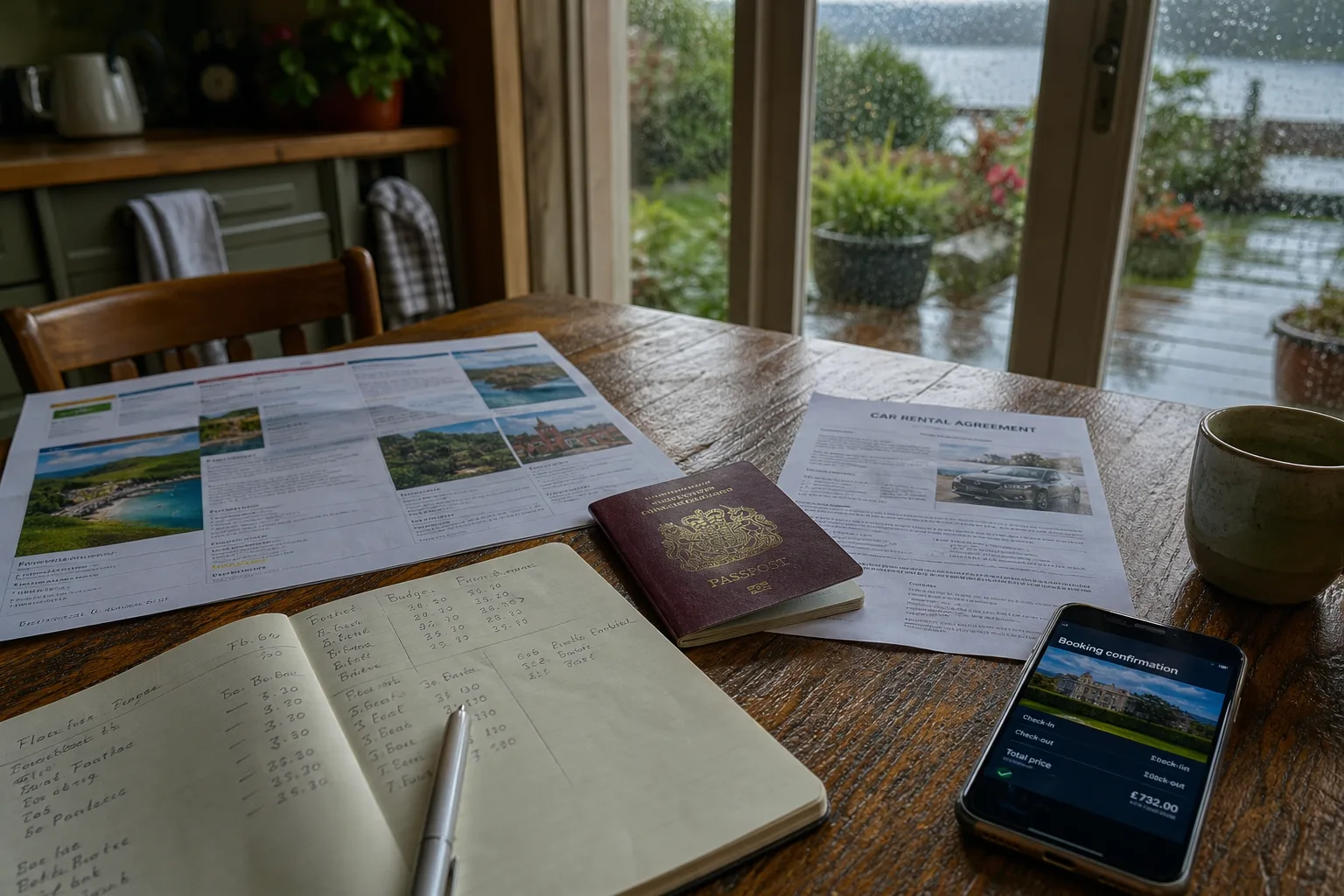
Someone hands you a number and asks you to make a trip happen inside it: the figure four friends agreed to split, the amount a parent is willing to spend on a family week, the ceiling a client set for a conference trip. The number is rarely the thing that breaks. What breaks is the assumption that every line in the itinerary behaves the same way under pressure. A flight, a villa, a guide and a rental car are priced on three different models, and each one decides, in advance, whose problem it is when the trip costs more than planned.
Three ways a trip is priced, and where the risk sits
A fixed price is a promise about the total: the all-inclusive resort, the packaged tour, the prepaid rail pass, the cruise fare. The seller has done the arithmetic, added margin for the things that go wrong, and agreed to absorb the difference if they go wrong more often than usual. A day rate is a promise about a unit of time, not about the trip: the car at a daily rate, the guide at a daily rate, the apartment at a nightly rate. Run long and the meter runs with you. Cost plus is the model underneath most independent travel, where you pay actual costs as they land and carry every variance yourself.
None of the three is better. They allocate risk differently, and the question worth asking before you book is which risk you are in a position to absorb. If the money is yours and flexible, cost plus is usually cheaper, because you are not paying anyone a margin to worry on your behalf. If the money belongs to several people who agreed on a figure, a fixed price buys something more useful than savings, which is the ability to tell them what the answer is before you leave.
The consequences people rarely trace back to the model
The family that never argues at dinner is usually the family on a fixed-price booking, where the question of whether to order a second round has already been settled by the contract. The group that spends the last two days quietly resentful is usually on cost plus, because every small decision became a negotiation about someone else's money. A guide who stops at four o'clock sharp is not being difficult; a day rate was agreed, and the day is over. These are not personality differences. They are the pricing model showing up at the table.
The same logic runs through the arithmetic that goes wrong most often. A rental car at a day rate quoted over six days becomes a seven-day charge when a flight is rebooked, and the seventh day is frequently priced worse than the first six. A fixed-price package absorbs a canceled excursion without a conversation, while the independent version turns a weather day into a sequence of nonrefundable losses. Knowing which model you are under tells you which disruptions cost you money and which ones cost you only the afternoon.
Local rules move the line between included and extra
Here is where a budget set at home stops matching the bill on the ground. Many cities and counties levy a lodging or tourist tax that the booking platform does not collect, and it is charged at the front desk on arrival, sometimes in cash, sometimes per person per night. Several states add airport concession fees and vehicle license recovery charges to a car rental that were not in the daily rate you compared. Drive into Mexico and liability coverage written by a Mexican insurer is required by law, regardless of what your card or your own policy says, so a rate that looked fixed acquires a mandatory addition at the counter.
The pattern repeats in smaller ways everywhere. Fuel policies differ by country and by franchise, so prepaid tank, full-to-full and refueling service are three different bets on how much driving you actually do. Tolls are billed through a transponder you did not know you rented. Some destinations fold service into the posted price and treat an added tip as unnecessary; others do not, and a budget built on American tipping norms overshoots or undershoots by a predictable margin. In the United States, the Federal Trade Commission is responsible for how prices are advertised and disclosed to consumers, which is why mandatory resort fees and similar add-ons have steadily moved toward the first screen rather than the last.
Writing it down with the people whose money it is
If you are booking for others, the useful document is short and unglamorous. It names what the fixed-price items cover, lists the day-rate items with the number of days assumed, and states plainly which categories are cost plus and therefore uncapped. Then it sets a contingency figure, ten or fifteen percent of the total depending on how many unfamiliar jurisdictions the trip touches, and says who decides when it gets spent and who contributes if it is exhausted. Agreeing that in a kitchen six weeks out is a different conversation from having it in a hotel lobby at eleven at night.
That one page also makes the comparison honest. Two quotes that differ by a third are often the same trip priced under two models, one carrying the overrun and one handing it to you.
Decide which of those you are buying, and the number you were given becomes a number you can actually hold.