Selling From a Spare Room? What a Third Party Warehouse Actually Charges You
A plain accounting of what outsourced storage and shipping costs a one-person operation, which line items move, and what to agree in writing before you ship a single pallet.
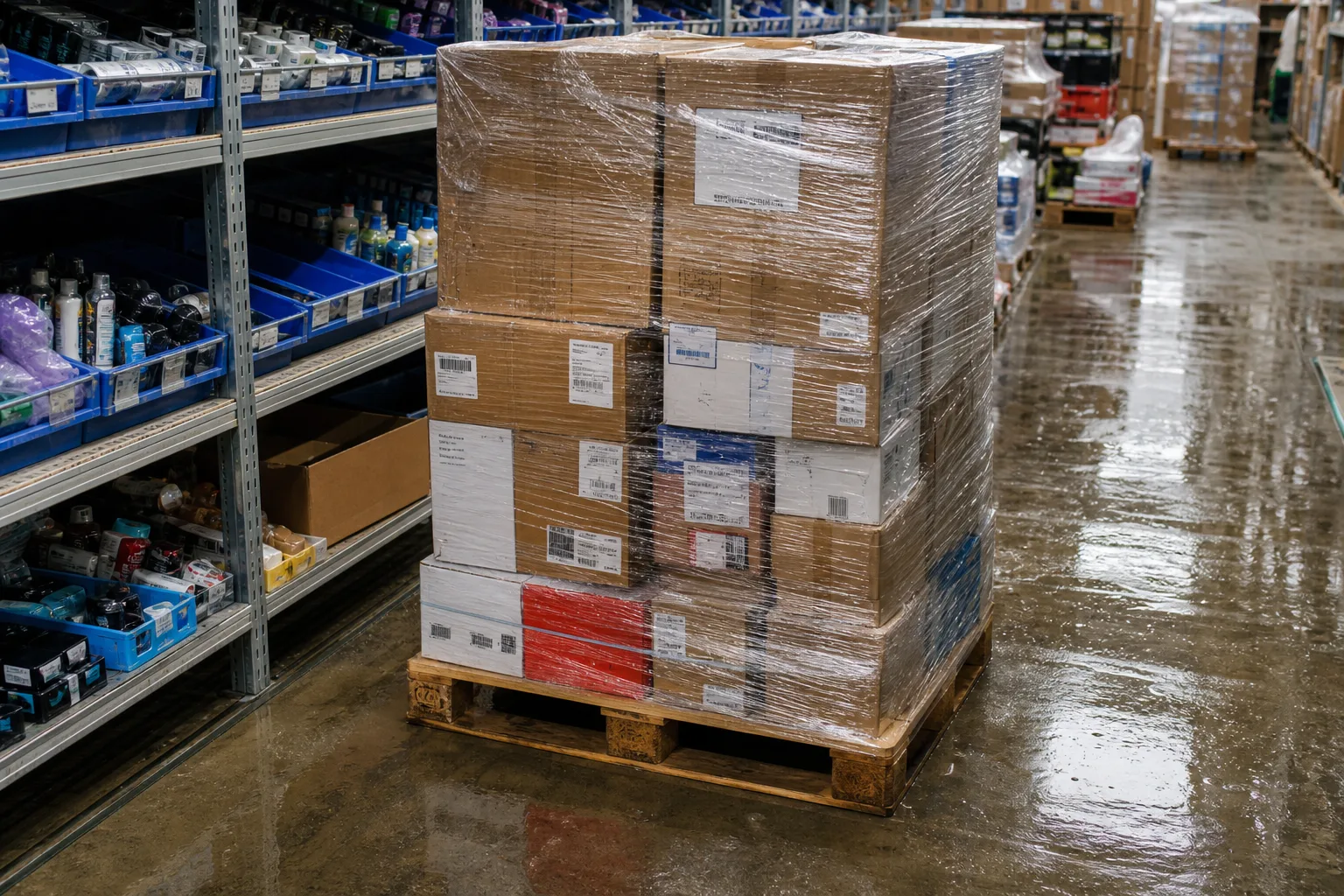
The decision usually arrives the same way. The stock has taken the spare room, then the hallway, and the person packing boxes at ten at night is also the person who answers customer email, and the math on their own unpaid hours has stopped being funny. Moving inventory into someone else's building is the obvious next step, but the pricing is quoted in a vocabulary built for companies that ship by the truckload, and a household-scale seller reading a rate card for the first time has no way to tell which numbers will dominate the invoice. They almost always guess wrong.
The four fees that make up almost every invoice
Strip the jargon away and an outsourced fulfillment bill has four parts. There is receiving, charged when your shipment arrives and gets counted into the system, usually priced by the pallet or by the hour of labor it takes to break down a mixed delivery. There is storage, billed monthly against the space you occupy, measured in pallets, shelf bins, or cubic feet depending on how small your footprint is. There is pick and pack, the per-order charge for someone retrieving your items and boxing them. And there is the shipping itself, bought at the provider's negotiated rate and passed to you with or without a markup you should ask about directly.
Materials sit alongside those four and are easy to miss. Boxes, void fill, tape, thermal labels, and any printed insert you want in the parcel are generally billed separately, at cost plus handling or at a flat per-order rate. A seller who budgeted for storage and ignored packaging can find that consumables are a meaningful share of what they pay each month, particularly on low-value items where the box costs a real fraction of the product. Ask for a sample invoice from a comparable account before you sign anything. The structure tells you more than the headline rate does.
What actually drives your number up or down
Three things move the bill more than price negotiation ever will. The first is how many separate items are in a typical order, because a one-item order is a single pick and a four-item order is four, and most rate cards charge a lower rate for each additional line after the first. The second is dimensional weight, the pricing method carriers use when a box is bulky relative to its mass, which punishes anyone shipping pillows, lampshades, or anything that travels mostly as air. The third is how long stock sits. Slow-moving inventory accrues storage month after month while generating nothing, and some providers add long-term surcharges past a set number of days.
Seasonality compounds all of it. A household operation that does most of its business in a ten-week window pays storage for the other forty-two, which is the single most common reason a first-year fulfillment arrangement looks more expensive than the spare room did. The fix is usually scheduling rather than renegotiation: landing inventory later, in two deliveries instead of one, and accepting a slightly higher per-unit freight cost to avoid paying rent on boxes you will not touch until October. That tradeoff is arithmetic you can do yourself, before you ever ask for a discount.
Assembly work, and why it is quoted separately
If your product is not one thing in one box, the labor sits outside standard pick and pack. Gift sets, starter bundles, subscription boxes, anything where several components and a printed card go into a branded mailer: that work is quoted by the unit or by the hour, and it is where a small seller gets the most genuine relief, because assembly is the part that consumed their evenings. Providers offering custom kitting services will typically want a sample kit, a bill of materials, and a photograph of the finished parcel before they quote. Build those three documents carefully. They become the specification your orders are checked against, and a vague one produces inconsistent kits and an argument later.
Kitting also changes your storage math in a useful direction, since components stacked tightly occupy less space than preassembled sets, and assembling to order means you are not holding finished goods in a configuration that stops selling. Decide whether kits are built in advance or on demand, write that into the agreement, and confirm who absorbs the labor cost if you change the contents mid-season.
The software layer, and what happens if the provider disappears
Every provider runs a warehouse management system, and what you are really buying is an account on it. That system needs a working connection to your store, which usually means a prebuilt integration for the major platforms or, failing that, a middleware subscription that someone has to pay for monthly. Ask what the integration does when it breaks: whether orders queue and retry, whether anyone is alerted, and how a stuck order surfaces before a customer emails you about it. Ask also how inventory counts reconcile, because a system that silently drifts from physical stock will oversell you into refunds, and the Federal Trade Commission oversees how sellers represent shipping timelines to buyers, which makes an accurate count a compliance matter and not just an operational one.
Then ask the question almost nobody asks at signing. If the provider ceases trading, is acquired, or simply gives you notice, what do you get back and how fast? You want three things written down: that the physical stock is yours and removable within a stated number of business days, that you can export your order history and inventory records in a standard file format at any time without a fee, and what the per-pallet cost of an exit pickup will be. Providers who have thought about this answer easily. Keep your own copy of the order export monthly, stored somewhere you control, because the records are what let you reopen with someone else in a week rather than a quarter.
Run the numbers against one honest month of your own data: real order profiles, real box sizes, real weeks when nothing moves. The comparison that matters is not warehouse rent against your spare room, which is free, but the full fulfillment cost against the hours you are currently spending and what those hours could otherwise earn.