Booking a Trip? Work Out Who Carries the Overrun Before You Pay the Deposit
Holiday prices arrive as fixed price, day rate or cost plus, and the model decides who pays when the trip runs long, not the headline number.
The gap between what a trip was advertised at and what the household actually paid is rarely the result of overspending on dinner. It is usually structural, decided weeks earlier, at the moment somebody clicked a deposit button without noticing which kind of price they had agreed to. Every travel purchase sits in one of three shapes: a fixed price, a day rate, or a cost plus arrangement where you reimburse what gets spent and pay a margin on top. Those three distribute the risk of an overrun very differently, and the person booking on behalf of a family is usually the one who absorbs the difference.
Read the price for its shape, not its size
A fixed price means the seller has already priced the risk that something takes longer or costs more, and has agreed to eat it. A package tour quoted at one number per person, inclusive of transfers, is a fixed price, and the operator is betting that the bus will not break down often enough to matter. A day rate shifts that bet onto you: the guide, the boat, the rental car and the babysitter all charge per unit of time, and if the day runs long, the meter runs with it. Cost plus is the third shape, less common but present everywhere in travel, and it is the one people misread most often.
Cost plus looks like a service fee. A travel advisor who charges a planning fee and books at supplier rates is on cost plus, and so is a concierge who arranges tickets and adds a percentage. There is nothing wrong with the model. It is honest about the fact that nobody yet knows what the trip will cost, and it puts the buyer in control of scope. What it does not do is cap anything. The household holds the entire overrun risk, and the only defense is deciding in advance how much scope you are willing to authorize.
Where day rates quietly become the whole vacation
Car rental is the clearest household example. The headline is a daily figure, and everything that makes the car usable is priced separately: the second driver, the collision damage waiver, the toll transponder, the young driver surcharge if a nineteen year old is going to take a shift on a long drive. Each of those is also a day rate, multiplied by the same number of days, so a modest rate on a two week trip compounds into a number nobody planned for. The airport concession recovery fee and the facility charge ride along on top. None of this is hidden. It is simply priced per day while the shopper is thinking per trip.
Parking behaves the same way, and so do ski lockers, beach chair rentals, bike hire, and the kennel back home that is charging for the dog while you are gone. The practical test for a household is to take every line quoted per day, per person or per night, and multiply it out to a trip total before comparing anything. A resort charging a nightly destination fee for two adults across nine nights has added a real sum to the booking, and it belongs next to the room rate rather than in a footnote. Once everything is expressed as one trip total, the comparison between two options usually reverses at least once.
Ask who carries the overrun, and get the answer in writing
The question that settles most of this is short: if this takes longer or costs more than expected, who pays? Ask it of the charter captain, the private driver, the guide, the villa manager and the tour operator, and the answers will sort themselves into the three models immediately. A captain who says the price covers the day regardless of weather is selling a fixed price. One who says the rate is hourly with a four hour minimum is selling a day rate, and the difference between those two answers is the entire cost of a slow afternoon. Written confirmation matters because the person quoting is often not the person invoicing.
What you want in writing is narrow and easy to request by email. The total for the scope as described, what is specifically excluded, the rate that applies to anything beyond the scope, and the point at which someone will stop and ask you before spending more. That last item is the one households forget, and it is the one that prevents an argument at checkout. A villa manager authorized to arrange a chef, a boat and airport transfers on your behalf should have a ceiling above which they call you first. Set it at a number you would be comfortable paying twice.
The charges that appear after you have already gone
A category of trip cost lands weeks later, when the trip itself is over and the household has stopped tracking. Toll invoices from the rental company arrive with an administrative fee attached to each crossing. Foreign transaction fees appear on the card statement at a small percentage of everything bought abroad. Damage and cleaning holds convert into charges, incidental holds release slowly, and dynamic currency conversion at a foreign terminal quietly moved the exchange rate against you at the moment of purchase. The Department of Transportation oversees how airlines disclose fees to passengers, and the direction of travel in disclosure rules has been toward showing the real total earlier in the booking path, which helps at the point of sale but does nothing about the tolls.
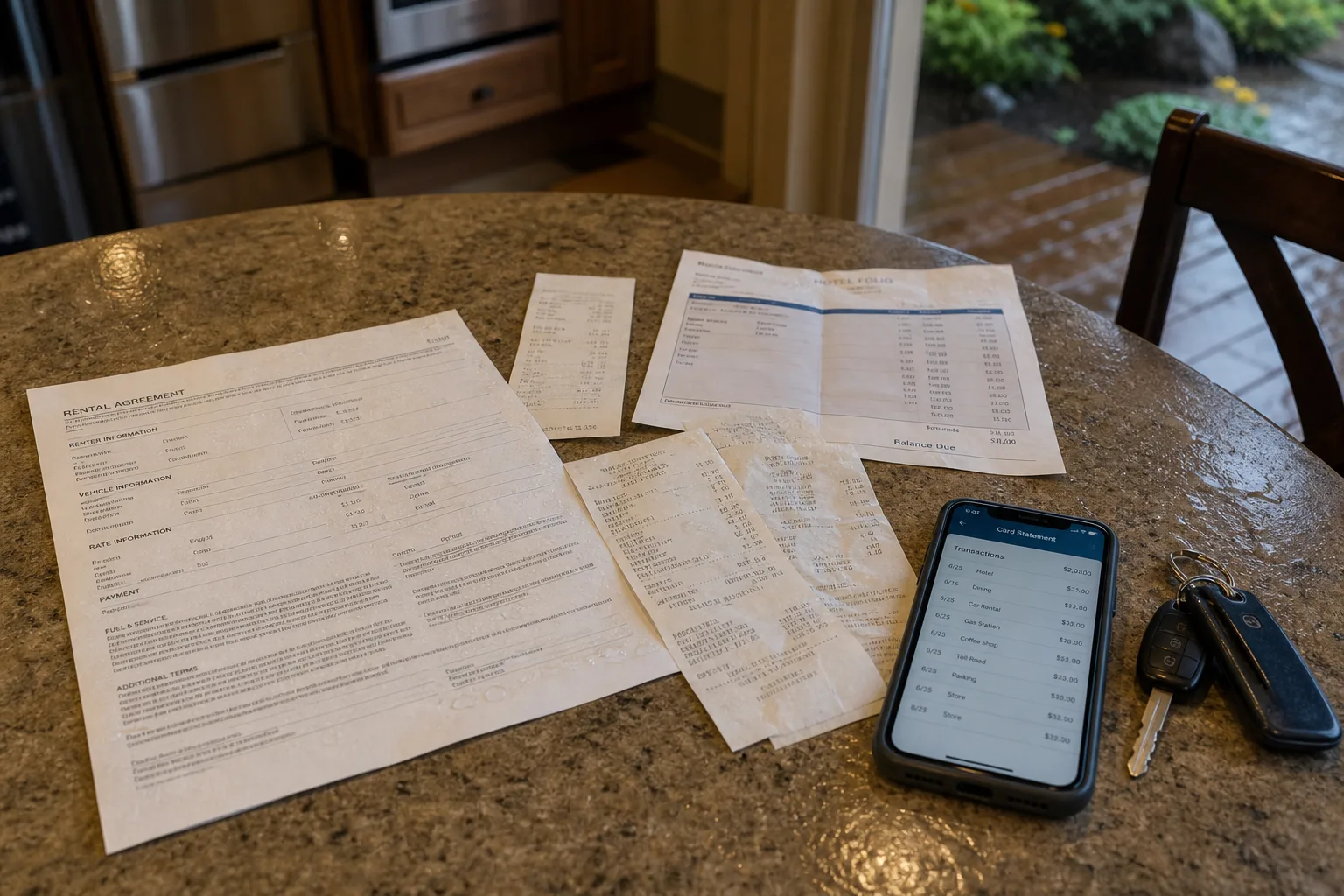
The fix is a habit rather than a purchase. Keep one folder, physical or otherwise, with the rental agreement, the hotel folio, the card receipts and any email confirming a quoted total, and give it a calendar reminder six weeks out. When a charge appears, you are comparing it against a document rather than a memory, and disputes resolved with a document attached are settled far more quickly. Households that do this once tend to keep doing it, because the first time a duplicate toll fee comes off a statement, the fifteen minutes pays for itself.
Build the budget around the model you chose
Once you know which model each piece of the trip sits in, the contingency figure stops being a guess. Fixed price components need no cushion, because the supplier has already taken that risk and charged you for it. Day rate components need a cushion sized to the plausible overrun: one extra day of the car, two extra hours of the boat, a late checkout. Cost plus components need a stated ceiling, agreed before anyone starts spending. A family that allocates in that order usually finds the total is close to what they expected, and the money left over is the part that makes the trip feel unhurried.
The useful discipline is not frugality. It is noticing, before the deposit clears, whether the number in front of you is a promise, a meter, or an open account, and then asking for the one clarifying sentence in writing that turns an open account into a bounded one.