Booking Someone Else's Trip on a Fixed Budget? What Changed in the First Price You See
A family booked the same week twice, a year apart, and the difference between an adequate job and a good one came down to total pricing and four inches of bathroom clearance.
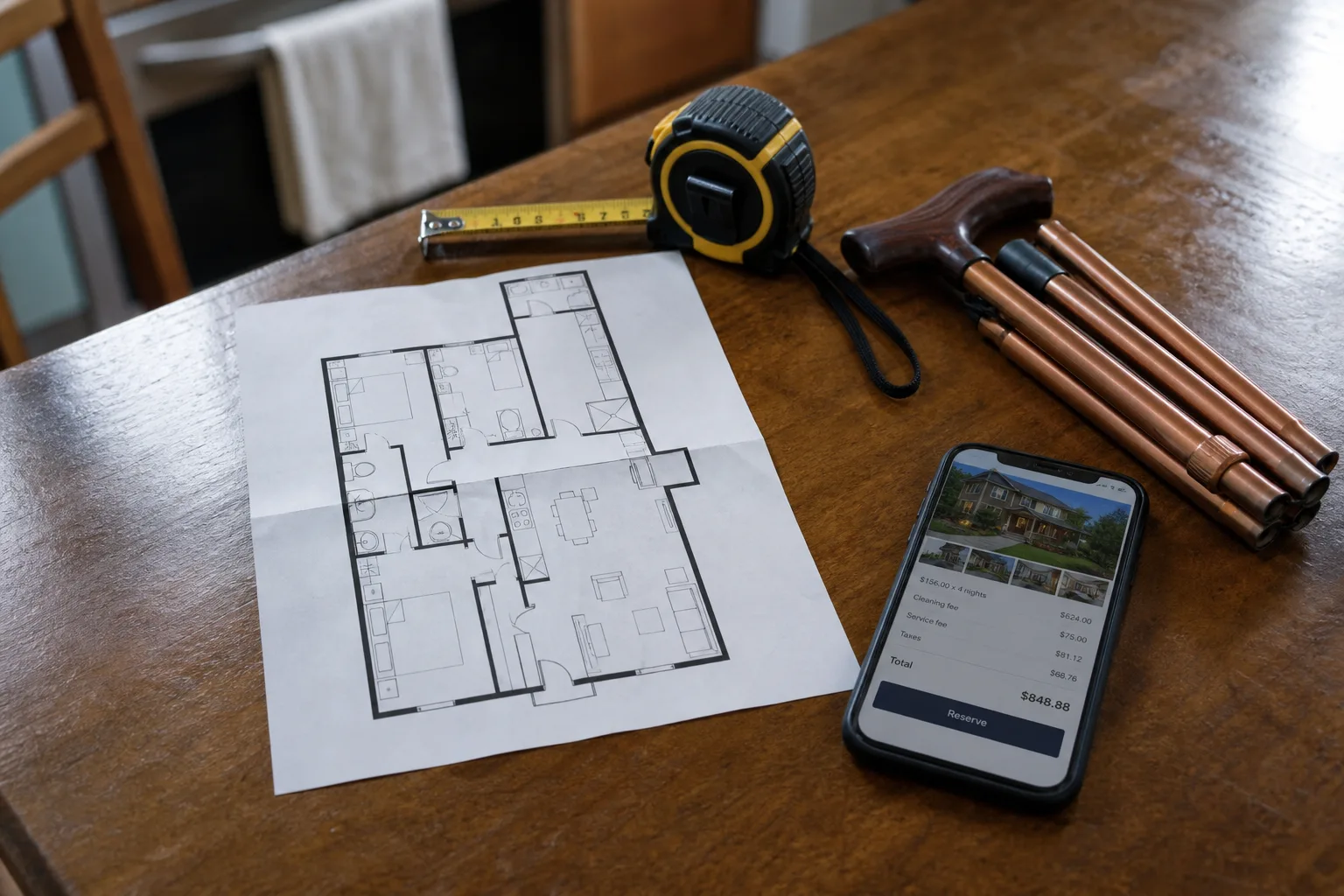
The same family booked the same week in the same coastal town twice, a year apart, for the same aunt, and only the second attempt worked. Nothing about the budget changed. The number had been set years earlier, when three siblings agreed on what they could each put in annually so that their mother's sister, who no longer drives and no longer flies without help, could still get out of her apartment for a week in the fall. What changed was the information available at the moment of booking, and what the person doing the booking chose to measure before she paid.
Two bookings, one budget, and the gap between them
The first year, the niece who handled it did what most people do: she sorted rentals by nightly rate, picked the cheapest one that slept four and sat within a short walk of the water, and put the rest of the budget toward flights and a rental car. The nightly rate she compared against was not the nightly rate she paid. Cleaning, a service charge, a linen fee and local lodging taxes arrived at checkout and took a bite she had to cover by cutting the car down to a compact. That compact is the detail that mattered later, because her aunt could not get into it without help from both sides.
The second year, she started from the total. The listings themselves had changed: search results across the major short-term rental platforms began showing an all-in figure, fees folded in, rather than a headline rate that only resembled the price. The Federal Trade Commission is the agency responsible for policing deceptive and unfair pricing practices in consumer transactions, and the pressure it has applied to fee disclosure in lodging and ticketing has pushed the industry toward showing the number a customer will actually be charged. For someone working to a fixed ceiling, that single display change removed the largest source of error in the whole exercise.
Why the first price you see now behaves differently
A barely adequate job under the old display was not incompetent. It was arithmetic performed on the wrong input. When the visible rate excluded a cleaning fee that could equal a full night, a five-night stay and a seven-night stay looked much closer in cost per night than they were, and shorter trips were quietly penalized. Planners who did not know that pattern chose badly and blamed themselves. Now that totals are shown in the results grid, the fee structure is visible early enough to change the plan rather than late enough to only shrink the car.
The second change was in the air. Cabin bag enforcement tightened across several US carriers, with sizers at the gate used more consistently and personal item dimensions applied rather than assumed. For a traveler who packs medication, a folding cane and a week of clothes, the difference between a bag that fits the frame and one that does not is a gate-checked fee and a wait at a carousel she cannot manage alone. The niece measured the bag against the published dimensions before the trip, at home, with a tape measure, and bought one that cleared by an inch.
What the listing photos leave out, and where four inches decided it
Rental listings are photographed from corners with wide lenses, which is why a room in a photograph reads larger and flatter than it lives. The plan drawing, when there is one, is more honest about area and almost silent about the two dimensions that decide whether a place is usable: door width and turning space. Her aunt walks with a cane and needs something to hold on the way in and out of a bathroom. A vanity that projects a few inches further than the drawing suggests will close the gap between the fixture and the door swing, and at that point the door has to stay open for her to get through it.
So the second time, she asked the host three measured questions before booking, in writing: the clear width of the bathroom doorway, the distance from the toilet to the nearest wall on the grab side, and whether the shower had a curb and how high it stood. The host replied with numbers. The bathroom doorway was four inches wider than at the first house, the shower had a low curb rather than a tub wall, and the entry had two steps with a rail rather than four without. None of that costs money. All of it separated a week that worked from a week that was survived.
Where a good job puts the slack it keeps
The difference between the two bookings was not that the second spent more. It spent the same, in a different order. She priced the ground transportation first, because that was the constraint that could not flex: a sedan with a high seat and doors that opened wide, reserved with a rate she confirmed included the airport concession fee and the young-driver surcharge that applied to her nephew. Then she chose lodging from all-in totals rather than nightly rates. Then she held back a defined reserve, roughly a tenth of the budget, untouched until the second-to-last day.
She also wrote it down, which is the part families skip. Three siblings were paying, one was booking, and the person traveling was not the person holding the card. A one-page note went to all of them before any money moved: the total committed, what each fee was for, which reservations were refundable and until when, who would call if a flight was canceled, and what the reserve was allowed to be spent on. When a connection was rebooked and an extra hotel night became necessary, nobody had to convene a discussion about whether that counted. The reserve covered it, the note had already authorized it, and the trip continued.
The test a plan has to pass before you pay
Ask what a fixed budget is actually being defended against. Not extravagance. Against the fee you did not see, the vehicle that turns out to be unusable, the doorway four inches too narrow, and the argument among the people paying about whether an unplanned expense was legitimate. Total-price listings and clearer bag rules closed two of those gaps without anyone in the family doing anything. The other two closed because someone asked for measurements in writing, kept a reserve she named in advance, and treated the plan as an agreement among the people funding it rather than a private spreadsheet.
The aunt went again the following fall. Same budget, same town, and the same house, booked earlier, at a total she could read on the first screen.