Booking a Trip for Someone Else? Five Checks on What the Protection Actually Covers
What the word protection means on a large travel platform, which failures it answers for, and the five things to confirm before the card is charged.
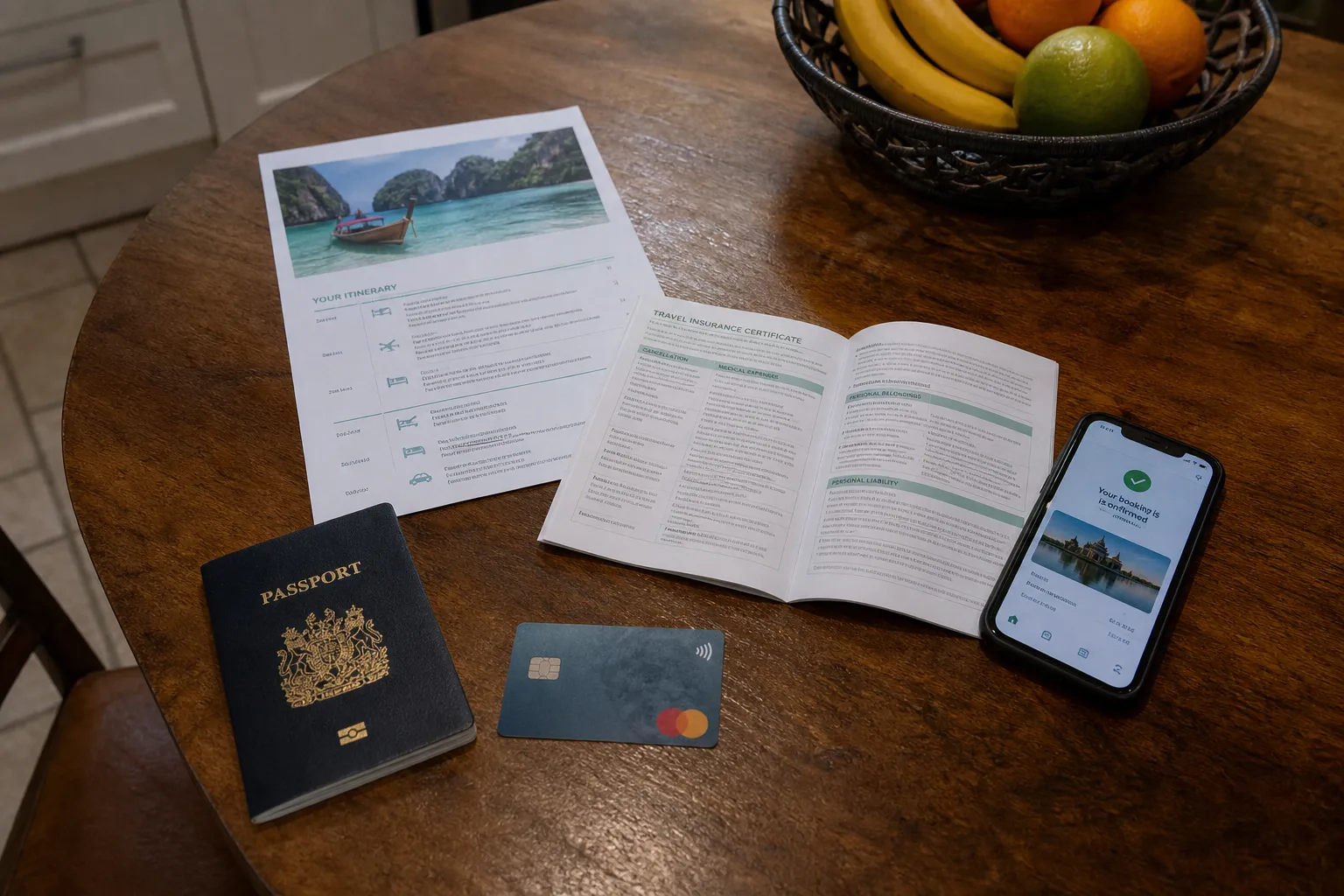
The word protection appears three or four times during a large travel booking, and it does not mean the same thing twice. Sometimes it is an insurance policy underwritten by a licensed carrier and regulated by a state insurance department. Sometimes it is a waiver the platform sells against its own cancellation penalties, which is a contract term rather than insurance. Sometimes it is nothing more than the dispute rights your credit card already carried. When you are booking for a parent, an adult child, or a group of eight, the distinction decides who you call and what they owe you.
1. Find the merchant of record before you find the price
The name that lands on the card statement is the entity you have a contract with, and on a large platform it is frequently not the airline, hotel, or tour operator you believe you booked. Prepaid inventory sold by an online agency usually posts under the agency's own name, which means refunds route through the agency's system on the agency's timetable. Pay-at-property bookings post under the hotel. That single line on the statement determines which company's cancellation policy governs, which company's support queue you join, and, if it comes to a dispute under the Fair Credit Billing Act, which merchant your card issuer contacts. Screenshot the confirmation page and keep the emailed itinerary rather than relying on the app.
2. Ask whether the product is a policy or a waiver
An insurance product will name an underwriter, produce a certificate or description of coverage running to several pages, and tell you which state's law applies. A waiver will not, because it is a promise from the seller to release you from its own penalty schedule, and its value depends entirely on the seller still being in business and still honoring it. Both can be worth buying. They fail differently. A policy gives you a claims process, an adjuster, and a regulator to complain to if the carrier stalls; a waiver gives you a customer service ticket. On a checkout page that offers a nine dollar option and a ninety dollar option, this is usually the difference between them.
3. Read the trigger list, and the clock attached to it
Coverage is written around named events: illness certified by a physician, jury duty, a death in the immediate family, a named storm that closes an airport, an employer's written revocation of approved leave. Everything outside that list is excluded unless you bought a cancel-for-any-reason upgrade, which typically refunds a percentage rather than the whole cost and must be purchased within a set number of days of the first deposit. Pre-existing condition waivers carry the same purchase window, which matters enormously when the traveler is an eighty-year-old with a managed heart condition. Buying the protection later in the process, at checkout, can quietly place the booking outside both windows even though the checkbox still appears.
4. Check what happens if the supplier stops operating
Supplier default coverage, sometimes called financial insolvency, is the clause that answers for an operator that ceases trading before you travel, and it is the one most often omitted from the cheapest tier. Where it exists, it usually excludes the company that sold you the policy and any supplier already in public financial difficulty on the purchase date. Several states, among them California, Florida, Washington, and Hawaii, require sellers of travel to register and to hold customer funds in trust or post a bond, which gives you a recovery route that does not depend on the insurer at all. For air tickets specifically, the Department of Transportation oversees airline refund obligations, and a canceled flight sits under that authority regardless of who sold the seat.
5. Map the escalation route while everything is still working
Large providers have more than one door, and the useful ones are rarely the chat window. There is the support queue with its case number, the insurer's claims line with its own reference, the card issuer's dispute process with its filing deadline counted from the statement date, and the state insurance department that licenses the carrier. Write the four reference numbers in one place, with the name of the underwriter and the policy number, and give a copy to whoever is actually traveling. If the platform folds, the app stops loading and the itinerary inside it goes with it, so the exported PDF and the confirmation email in a mail account you control are the records that survive. That is the whole point of keeping them.
What the size of the provider changes
Booking through a large platform generally buys you three practical things: inventory held under contract rather than resold, a claims administrator with staffed phone hours, and a compliance department that has already answered to state regulators and prefers to keep doing so quietly. It also introduces layers, because the entity that took your money, the entity that operates the tour, and the entity that underwrites the policy may be three separate companies in three jurisdictions. The advantage is real and worth paying for, provided you spend ten minutes at the start identifying which of the three you are dealing with for which kind of failure. Written down once, that map holds for the whole trip.
The check worth doing today, before anything goes wrong, is a plain reading of the certificate against the traveler in front of you: their age, their health, their employer, their tolerance for a partial refund. Protection sold as one product is really a set of conditional promises, and the conditions are knowable in advance. Confirm them before the card is charged, keep the paperwork somewhere that does not depend on a company's servers, and the person traveling has a working answer rather than a phone number.