Comparing Fulfillment Quotes? The Five Lines That Decide What You Actually Pay
A fulfillment rate card looks like a price until you read what sits outside it, and most of the surprises land in front of your customer first.
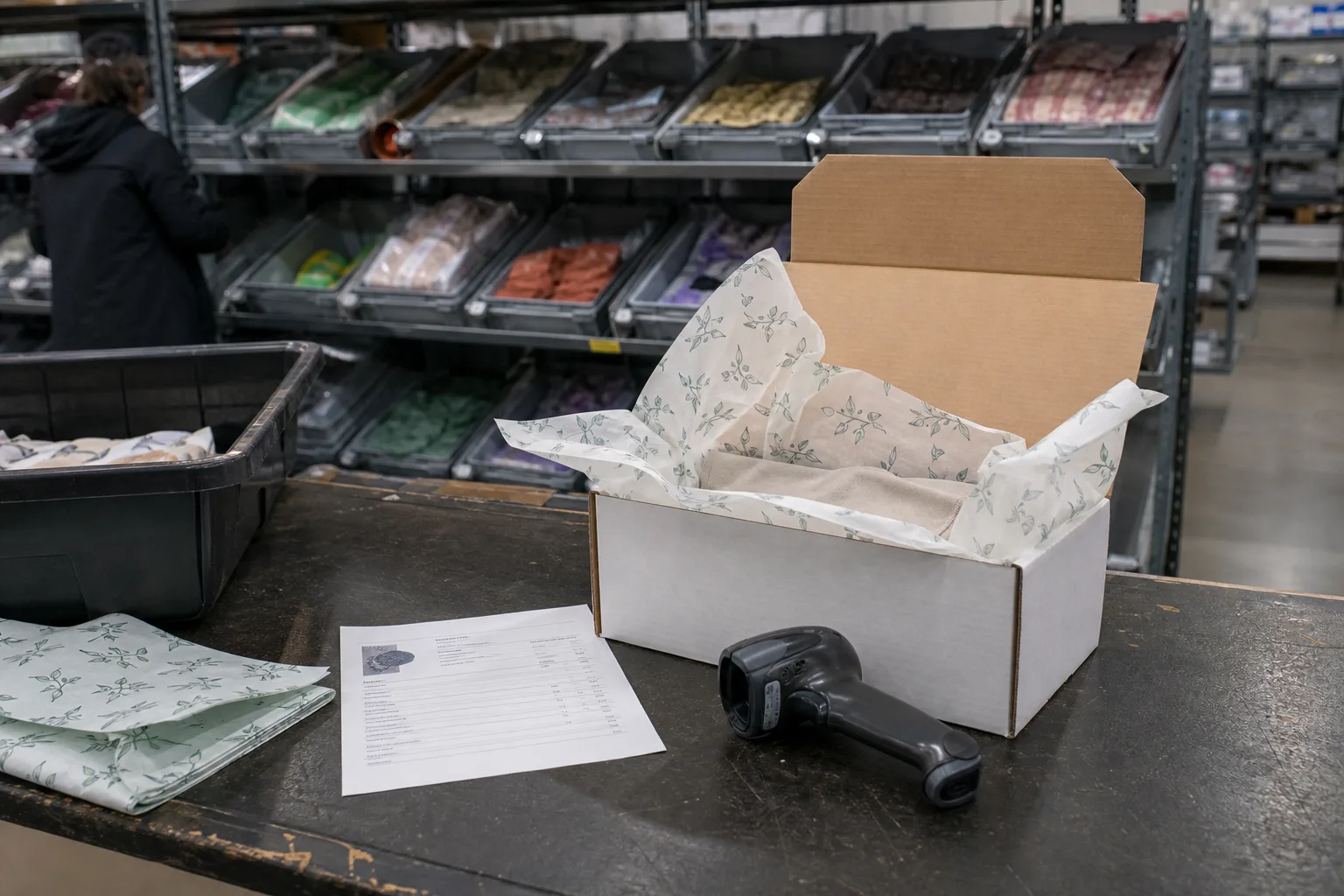
A fulfillment quote arrives looking like a price list, and it is closer to a menu written by someone who already knows what you will order. The per-order number sits at the top in bold, because that is the figure buyers compare, and the lines that actually move your monthly invoice sit further down under headings like receiving, project work, and non-standard handling. You are signing this on behalf of people who will never read it. They will feel it, though, in how fast a box arrives, what it looks like when it lands, and how much argument a return takes.
Receiving, SKU setup, and the invoice that arrives before a single order ships
The first bill from a third-party warehouse usually has nothing to do with orders. It covers inbound receiving, priced per pallet, per carton, or per labor hour, and it climbs sharply when a container arrives floor-loaded rather than palletized, when cartons are unlabeled, or when the packing list does not match what comes off the truck. SKU setup is often billed separately, as is barcode application for units that arrive without a scannable label. None of this is hidden, exactly. It is simply quoted in a different unit from the one you were comparing, so two providers can look thirty percent apart on picking and land in the same place once your goods are actually on a shelf.
Ask what happens on a discrepancy. A warehouse that counts, photographs, and reports a short shipment within a day gives you a chance to tell your customers before they find out from a stockout page, and that early warning is worth more than a few cents on the receiving rate. Get the integration timeline in the same conversation: who maps your store's SKUs to theirs, who owns the connection when an order fails to import, and how long the setup work is expected to take. That gap between contract signature and first shipped order is where launch dates quietly slip.
Storage, and the unit of measure that decides the number
Storage is billed by pallet, by shelf, by bin, or by cubic foot, and the unit matters more than the rate. A provider charging by the pallet position looks cheap until you learn that a partial pallet bills as a full one, so forty units of a slow-moving color occupy the same line item as a full stack of your best seller. Bin pricing rewards small, dense items and punishes anything that will not nest. Cubic-foot billing is the most honest to compare across quotes and the hardest to forecast, because it moves with every inbound shipment.
Two extras attach here reliably. Long-term storage fees apply to inventory that sits past a stated window, and peak-season surcharges apply in the fourth quarter when warehouse space is scarce. Neither is unreasonable and both are avoidable if you know they exist, which is the whole argument for reading the storage section before the picking section. From your customer's side, storage decisions show up as availability. Inventory held in one building costs less to store and takes longer to reach a buyer across the country, and inventory split across two costs more and arrives faster. That is a real tradeoff, not a trick, and it belongs in the decision rather than in a footnote.
Pick, pack, and the box your customer opens
Almost every rate card prices the first item in an order at one number and each additional item at a lower one, which is why a quote that assumes single-item orders flatters a catalog that mostly ships bundles. Read what the pick fee includes. Standard packaging is often bundled at a nominal value, meaning a plain mailer or a stock corrugated box with dunnage of the warehouse's choosing. Anything you would recognize as your own presentation, branded boxes, printed inserts, tissue, stickers, gift notes, is billed as an extra touch, usually per order and sometimes per element.
This is the line where the customer experience is either bought or not bought. A buyer who opens a crushed mailer with a pack slip stapled to the invoice has a different impression of your business than one who opens a fitted box, and the difference between those two outcomes is a per-order fee you can calculate exactly. Ask for a sample pack of a real order in your own goods before you sign, and ask who pays when a fragile item arrives broken more often than it should. Kitting, assembling multiples into one sellable unit, is usually priced as a project at an hourly rate, and it is cheaper done once at receiving than repeated at every pick.
The shipping rate card, and why the customer reads it as slow
Postage is the largest number on most fulfillment invoices and the least comparable across quotes. Providers buy carrier capacity at negotiated rates and pass some of the discount through, so what you are really being shown is a blended estimate against an assumed order profile. The variables that move it are zone, which is distance from the warehouse to the buyer, and dimensional weight, which prices a light item in a large box as if it were heavy. Fuel surcharges float. Residential delivery, address correction, and oversize handling all carry accessorial fees that appear line by line on the carrier statement and get passed to you at cost or with a markup.
Get the markup policy in writing, and get a sample invoice showing accessorials broken out, because a provider that buries them in a flat per-order shipping charge is not necessarily overcharging but has removed your ability to check. Then translate the whole thing into what a buyer sees. A single East Coast warehouse means a three-day promise becomes five days in California, and split shipments mean two tracking numbers for one order and a support ticket asking where the rest of it is. The Federal Trade Commission oversees how shipping timelines are represented to consumers, so the promise on your product page and the transit reality in the rate card need to be the same story.
Returns, exceptions, and the exit clause you will eventually need
Returns processing is rarely in the headline quote and always in the appendix. Expect a per-return receiving fee, a separate charge for inspection and grading, and another for restocking, refurbishment, or disposal, with the disposal option often cheaper than putting a low-value item back on a shelf. Ask how a return is recorded, how fast the disposition reaches your order system, and who issues the refund trigger, because the delay between a package landing at the dock and a refund posting to a card is the single most common reason a buyer contacts you twice about the same order. Exceptions cost too: rush orders, order edits after release, manual address fixes, and anything the warehouse staff has to touch outside the normal flow.
The last thing to read is the part about leaving. A fulfillment relationship is an integration as much as a warehouse, and your inventory records, order history, and SKU mapping live inside someone else's software. Look for a stated notice period, a defined fee for pulling and palletizing your goods for transfer, an obligation to release inventory without a balance dispute holding it hostage, and a clear statement that you can export your own data on demand and in a usable format. Providers change hands, consolidate, and occasionally close. A contract that spells out how you get your pallets and your records back is what turns that from a crisis into a scheduling problem.
Run the quote against your own last ninety days of orders rather than the profile the provider assumed: real average units per order, real destination mix, real return rate. Then price the customer-facing extras separately, because branded packaging and two-warehouse coverage are choices about what your buyers experience, not overhead. Once both halves are on the page, the quotes stop looking similar and start looking like the different businesses they are.