Your Evidence Lives in Someone Else's App. What to Export Before the First Legal Meeting
A homeowner's dispute with a smart-home installer showed how much of the record now sits in vendor clouds that close, expire, or lock out the person who paid for them.
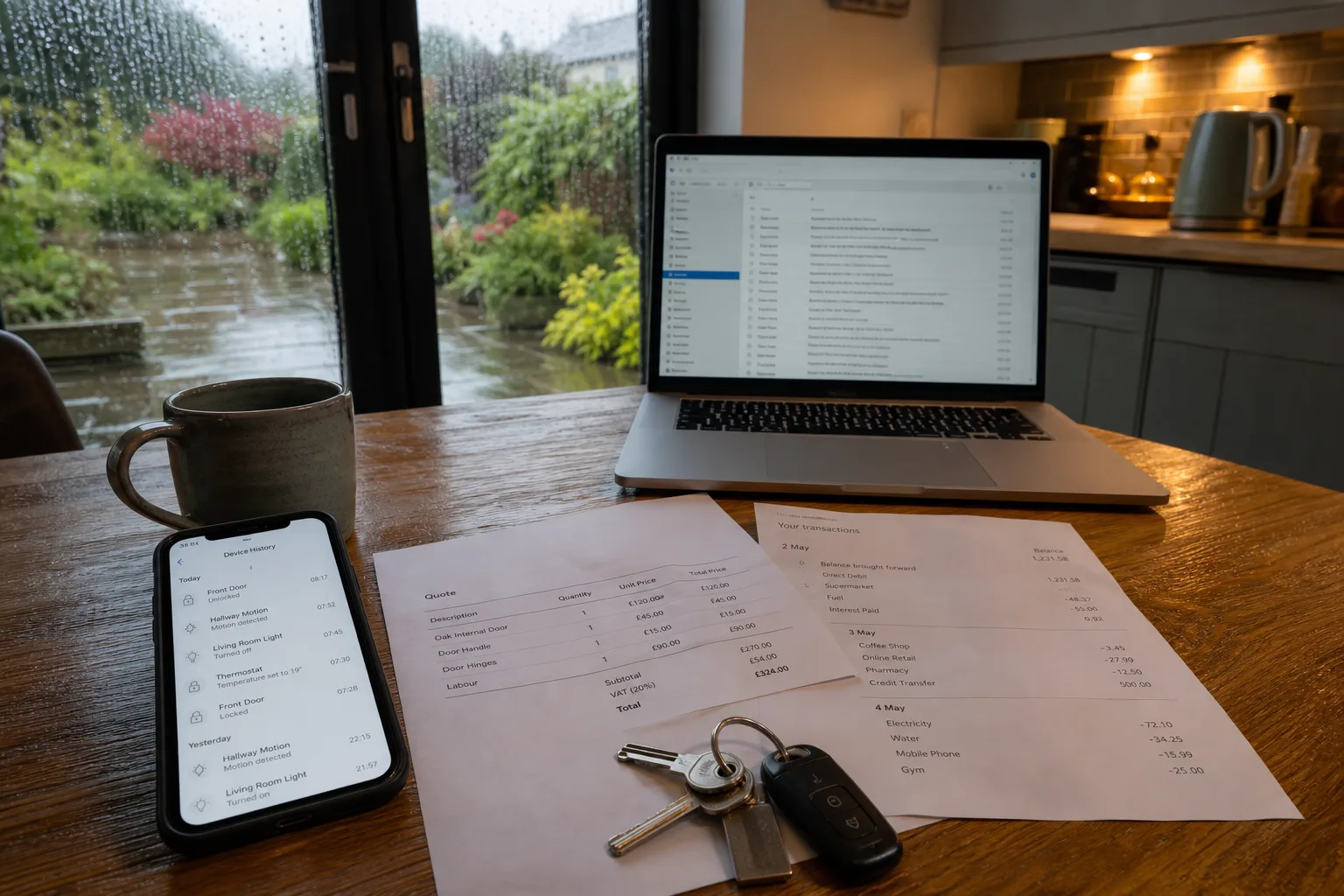
The dispute was ordinary. A homeowner paid an installer to put cameras, a video doorbell and three connected locks through a house she had just bought, the system never worked as described, and after four months of service calls she wanted her money back. What made the first meeting with an attorney difficult had nothing to do with the merits. She arrived with a phone, two app logins and a vague memory of a contract she had signed with her finger on someone else's tablet. The attorney spent most of a paid hour establishing what documents existed, and where.
What she actually had, and what she thought she had
She believed she had a contract, a payment record and a year of footage proving the system kept dropping offline. She had none of those in a form anyone could hand to a judge. The contract was an e-signature link emailed by the installer's software vendor, and the link had expired. Payment had gone by card and showed on a statement as a trade name she did not recognize. The footage lived in a cloud plan with a rolling retention window, so the early failures, the ones that mattered, had already aged out. The service calls were texts on a phone she had since replaced.
What she did have turned out to be more useful than it looked. The installer's own app kept a device event log, visible under a settings menu she had never opened, showing each camera's connection history back to the install date. Her email had the original quote as a PDF attachment, because the salesman had sent one before moving the job into the signing platform. Her bank could produce the merchant's legal name. The attorney's first instruction was not legal advice at all. It was a list of exports to run that week, before anything else expired.
The same meeting, ten years earlier
Run that dispute back a decade and the preparation problem barely exists. The contract is a carbon-copy work order left on the counter, the kind with a yellow sheet for the customer. Payment is a canceled check or a card statement naming an actual local business. Complaints go by phone and get followed up in a letter, and the letter has a date on it, printed by the sender, which is exactly the thing a lawyer wants. The homeowner brings a folder. The folder may be disorganized, but everything inside it is already a permanent copy, in her possession, that nobody else can withdraw.
The old version had its own gaps. Nobody had timestamped proof the system went offline on a Tuesday in March, so the case turned on testimony and the installer's word against hers. The trade was deeper evidence in exchange for less durable evidence. Connected equipment now records its own failures in detail that no 2015 case file could match, which is a genuine advantage, provided the record gets pulled out of the vendor's system and onto something the client owns before anyone needs it.
What changed recently, and why it changed
Three shifts landed close together. Subscription retention replaced local storage, so recordings now live on the manufacturer's terms and roll off on a schedule set by the plan tier rather than by the customer. Contracting moved into third-party signing and proposal platforms, which means the authoritative copy of an agreement often sits with a software company that has no relationship with the homeowner and no duty to keep her link alive. And consolidation in the smart-home market has made vendor shutdown a normal event, not a rare one, which matters because a company winding down takes its portal with it, usually with short notice and sometimes with none.
The regulatory conversation has moved with it. The Federal Trade Commission is responsible for consumer protection in exactly this territory, including how connected-device companies describe what a product will keep doing after purchase, and the agency's attention to the subject is part of why disclosure around service life and data access has become something manufacturers now address in writing. For a person preparing a case, the practical consequence is simple. The terms that govern whether you can still get your own records are written down somewhere, and they are findable before you need them.
The export, and what it bought her
She did five things in four days. She downloaded the full device event history from the app as a file, not a screenshot. She pulled the quote PDF and every email thread into a single folder with the original timestamps intact. She asked her card issuer for the merchant's registered name and the posting dates. She requested a copy of the signed agreement directly from the installer in writing, which also created a dated record of the request. She exported the text thread from her old phone's backup rather than retyping it.
The second meeting ran differently. With the event log in hand, the attorney could see the failures clustered in the first six weeks, which put the dispute inside the warranty period the quote described, and the conversation moved from whether there was a case to what demand letter to send and by when. The paid hour went to strategy because the sourcing work had already been done.
The pattern holds well beyond smart-home work. Anything bought through an app, signed on a tablet, or supported by a subscription keeps its proof somewhere a third party controls, and the window for retrieving it is set by that third party. Pull it down first. Then book the hour.