Fixed Price on Paper, Cost Plus in Practice. When One Family Stopped Fighting and Settled
A bathroom job ran six weeks late and quietly changed pricing models. The math that finally told the family when to settle, and what the fight would have cost to finish.
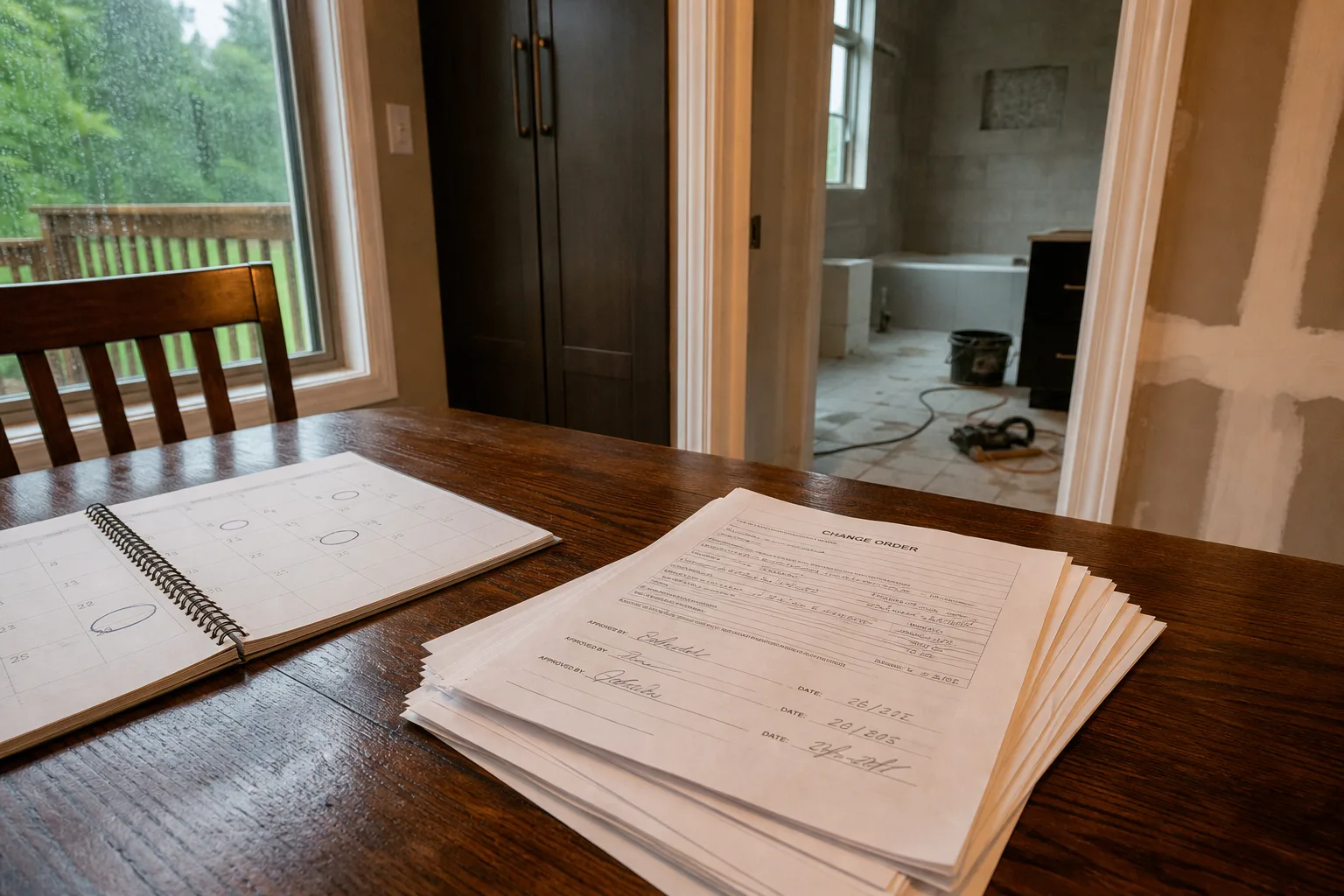
The contract said fixed price and named a completion date, and for the first three weeks the job behaved that way. Then the tile arrived damaged, the plumber found a cast iron stack that had to be cut back further than anyone expected, and the crew stopped appearing daily. The homeowner was in a rehabilitation facility recovering from a hip replacement; her daughter, three hours away, was the one reading the emails, approving the change orders, and paying from a joint account. By the time the original date passed, the arrangement she thought she had bought no longer described what was happening on the job.
What actually changed on that job, and when
The change was not the delay. It was the pricing model, and it moved in increments nobody announced. A fixed price puts the risk of an overrun on the contractor: he estimated the hours, he owns the miss, and if the stack takes two days instead of one, that is his problem to absorb. Each signed change order in this job, though, was written as time and materials, meaning labor at an hourly rate plus receipts plus a markup. Four change orders in, most of the remaining work had quietly converted to cost plus, and the daughter, not the contractor, was now carrying every additional hour.
That distinction matters more than the calendar does. Under the original terms, a six week slip cost the family inconvenience and a delayed return home. Under the terms they had signed their way into, the same slip cost money, because the clock was billable and the scope was open. Day rate arrangements sit in the middle: the rate is fixed, the number of days is not, so the owner absorbs duration while the contractor absorbs nothing beyond showing up. The Federal Trade Commission oversees how home improvement work is sold and represented to consumers, and the conversion from a firm number to an open one is precisely the shift that a homeowner acting for a relative should be able to point to in writing.
What running the dispute would have cost
She priced the fight before she started it, which is the step most people skip. An attorney who handles construction disputes will usually quote three ways: a flat fee for a demand letter and a couple of follow up calls, an hourly rate against a retainer for anything that becomes a case, and, occasionally, a contingency arrangement where the amount in controversy is large enough to interest someone. The flat fee letter is the cheap product and often the effective one. The hourly work is where the risk sits, because the retainer is a deposit, not a cap, and depositions, an expert to opine on workmanship, and a filing fee all bill on top.
Then there are the costs that never appear on an invoice. The mother could not come home to a house with one working bathroom, so the rehab stay extended, and that number was real and monthly. The daughter took days off. Mediation, which many contracts require before anyone files, carries a mediator's fee split between the parties and a day of everyone's time. Set against a disputed balance that amounted to roughly a fifth of the contract value, the arithmetic stopped being about principle within about two weeks.
The point where settling became the cheaper answer
The crossing point arrived when the projected cost of pursuing the claim, counting attorney hours, the expert, and the extended rehab stay, exceeded the disputed amount itself. That is the only test that matters, and it is a comparison, not a feeling. She got a second contractor to price the unfinished work as a fixed price, which gave her a hard number for completion rather than an argument about it, and that number became the anchor for the negotiation. The original contractor wanted to be paid something. She wanted the punch list closed and the cost plus billing stopped. Both of those were purchasable.
The settlement they reached released the contractor from the remaining scope, credited the family for the difference between his open ended billing and the replacement fixed price, and closed the account. Nobody conceded fault. The document said the payment resolved all claims arising from the contract, listed the items considered complete, and confirmed that no further invoices would issue.
What she would do differently on the next job
She now reads change orders for their pricing basis before their dollar amount, because a small change order written as time and materials can reset the entire risk allocation of a contract. She asks, in writing, whether a proposed change is fixed price or cost plus, and if it is cost plus, what caps it. She also keeps a running note of the delay's monthly carrying cost, since that figure is what converts a grievance into a decision.
Her mother came home eleven weeks after the original date, to a finished bathroom and a closed file. The second contractor's fixed price held.