Fixing a Ring That Isn't Yours? What Changed at the Bench, and What Still Decides the Quote
Laser welding, trade shops and metal prices have rewritten jewelry repair quotes. What still decides the job is a measurement in millimeters.
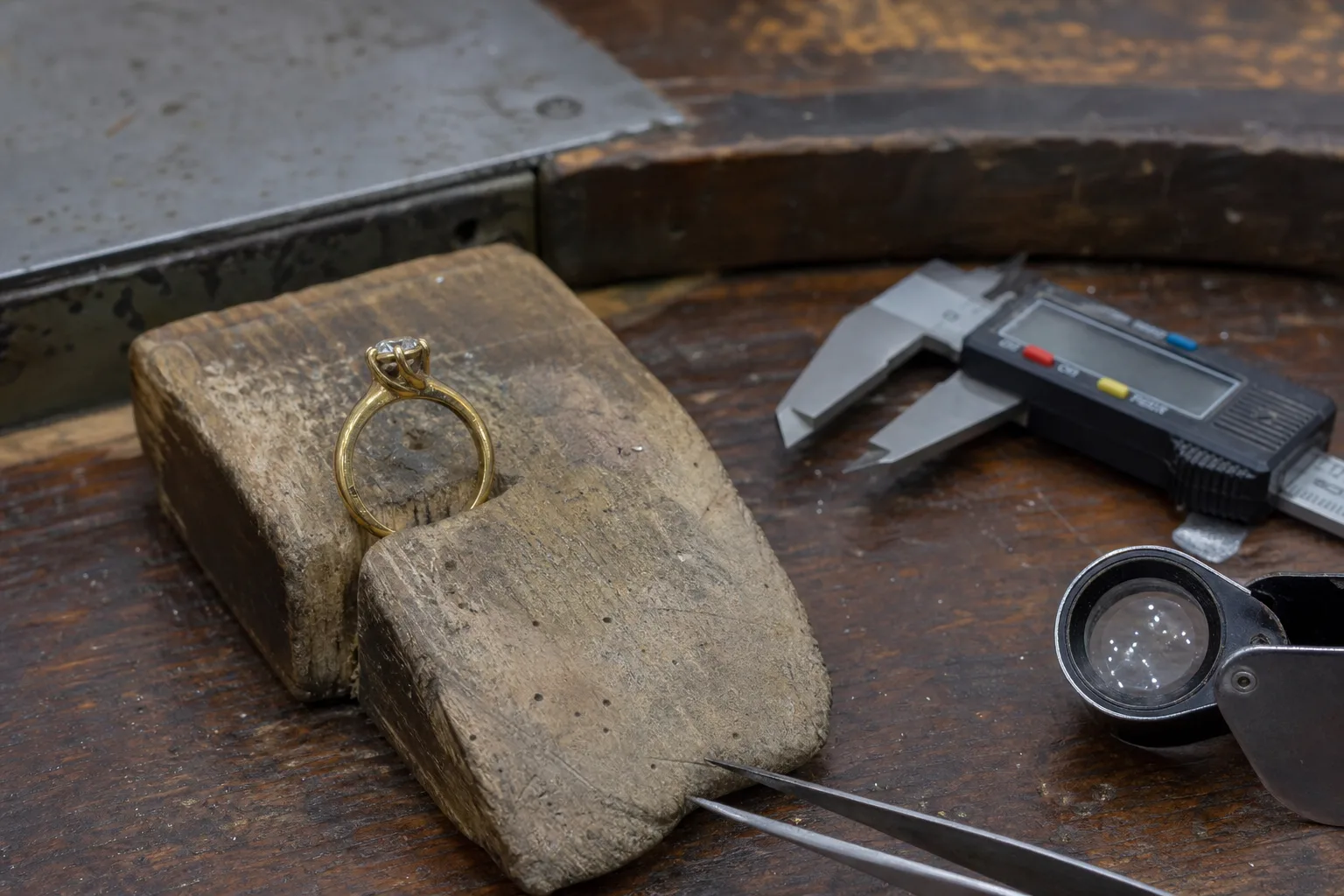
A ring shank that has thinned to the width of a heavy paperclip is not a candidate for sizing, and no amount of goodwill at the counter changes that. It is a candidate for a new shank, which is a different job at a different price. Most disagreements about jewelry repair start here, in the gap between what the owner thinks is being asked and what the bench is actually being asked to do. If you are handling a piece for someone else, an aging parent, an estate, a partner who cannot get to the shop, that gap is the thing you have to close before you authorize anything.
The measurement that decides most of it
Gold wears from the inside out, along the palm side of the shank, and the loss is gradual enough that the owner rarely notices. What a jeweler is checking, with a gauge rather than an opinion, is the remaining wall thickness and whether it can survive being cut, stretched and resoldered. Below roughly a millimeter, on a plain band, stretching the metal thins it further and the ring returns cracked within a year or two. A new shank costs more up front and ends the problem. Ask for the measured number, not the verdict, and the rest of the conversation gets easier.
Size range works the same way. Going up or down one size is routine on most settings. Going up three sizes on a channel-set eternity band means every stone shifts relative to its seat, and the correct answer is often that the piece cannot be sized at all and needs a sizing insert or a rebuild. Half a millimeter of gallery clearance decides whether a stone sits proud enough to be reset or has to come out first.
Laser welding moved the line on what is fixable
The genuine change of the last decade or so is that laser welding has become standard equipment rather than specialist equipment at working benches. A torch heats the whole piece; a laser puts energy into a spot a fraction of a millimeter across and leaves the metal a few millimeters away cool enough to touch. That is why repairs once refused are now quoted routinely: retipping prongs with the diamond still set, work near emeralds and opals and pearls that would not survive a torch, and joins on antique pieces where the old solder seams would otherwise flow and collapse the whole assembly.
It matters to you as the person paying because it changes what a refusal means. If a shop says a repair cannot be done without unsetting every stone, that may be accurate for their equipment and inaccurate for the trade shop down the road. It is a fair question to ask which method is being used and why.
Who is actually doing the work, and where
Fewer stores keep a full-time bench jeweler on site now, and a large share of counter-taken repairs travel to a regional trade shop and come back a week or two later. That is not a problem in itself, and trade shops often hold more capability than any single storefront. It becomes a problem when nobody tells you, because the person describing the job to the bench is not the person who looked at the ring. Ask where the work happens, get a written receipt that describes the piece in specifics (metal, stone count, approximate stone sizes, existing damage), and confirm the piece is insured in transit. For an inherited piece, photograph it before it leaves the counter.
The math on repair versus replace has shifted
Two price movements have quietly rewritten these decisions. Gold has stayed high enough that the metal in a rebuilt shank or a new head is a real line on the invoice rather than a rounding error, which pushes some quotes past what the owner expects. At the same time, small lab-grown stones have made replacing lost melee far cheaper than it was, so a bracelet missing four accent diamonds is now often worth restoring rather than retiring. The Federal Trade Commission oversees how those stones must be described in the sale and on the paperwork, and a reputable shop will note the substitution on the invoice without being asked. Get that noted anyway.
Putting the decision in writing when the piece is not yours
Acting for someone else means the reasoning has to survive being explained later, possibly to a sibling. Write down three things before you authorize: what the piece is worth roughly, what the repair costs, and what the owner wanted the piece to be, wearable daily or preserved as it is. Those pull in different directions. A replaced shank on a worn Victorian band makes it wearable and removes original metal permanently. Sentiment usually decides that one, but it should decide it out loud, and the invoice should record which choice was made.
The judgment you are building is narrow and useful: read the measurement, ask which method, know where the piece sleeps at night, and document the choice.