Insuring a Ring or a Watch? The Paperwork That Decides What You Get Back
An appraisal is a dated document, not a permanent one, and the difference shows up only when a piece is gone and the insurer asks what it was.
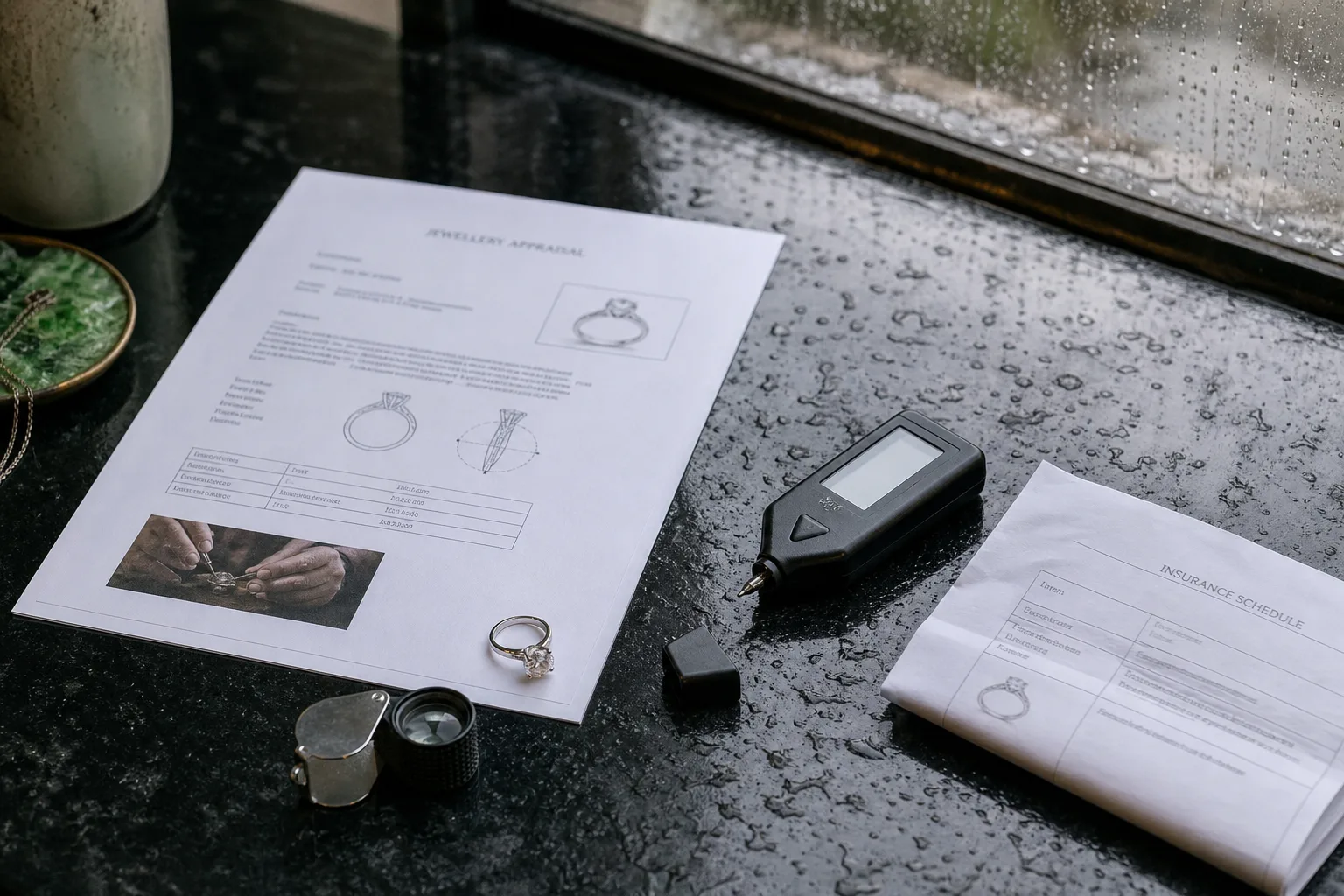
A ring occupies almost no space. It sits in a drawer in a box the size of a fist, and for years it asks nothing of anyone. Then it is gone, and the entire question of what it was worth collapses onto two or three sheets of paper written by someone you met once, possibly a decade ago, in a room behind a retail counter. Everything that follows depends on how precisely that person wrote. The claim is not settled by what the piece meant to the household. It is settled by measurements, weights, dates and a stated basis of value.
What a usable appraisal actually contains
Read an appraisal the way you would read a plan drawing: the value is the headline, but the dimensions are what make it buildable. A serviceable document identifies the metal and its fineness, the total weight, the number and placement of stones, and for the principal stone the carat weight, cut, color grade, clarity grade and measurements in millimeters. It names any lab report and its number. It describes the mounting style rather than merely calling it a setting. Vague appraisals fail in a specific way: an insurer offered a one-line description cannot source a replacement, so it prices the cheapest thing the words permit.
The other half of the page is the part customers skip. An appraisal has to state its purpose and its basis of value, and those two lines change the number completely. Retail replacement value, the figure insurers work from, is generally higher than fair market value, which is what an estate or a resale would fetch, and higher again than a liquidation figure. A document prepared for a divorce or a probate filing is not the document to hand your insurer. It is not wrong. It answers a different question, and using it means insuring a piece for a fraction of what buying another one would take.
Why the value on the page expires
Nothing happens to the ring. What moves is everything around it. Gold and platinum are traded commodities, colored stone supply shifts with mine closures and export rules, labor rates for bench work rise, and the specific model of watch that was sitting in a case at list price may now trade well above it or have been discontinued entirely. An appraisal is a photograph of a market on a particular Tuesday. Most insurers acknowledge this by asking for updated valuations on scheduled items periodically, commonly every few years, and some quietly limit what they will pay on a valuation older than a stated age.
The customer experience of a stale appraisal is not a refusal. It is a shortfall, discovered late. You scheduled a piece at a figure set nine years ago, you paid premium against that figure the whole time, and the check arrives at that figure while the replacement quote from the jeweler sits several thousand dollars above it. The gap is yours. Updating is cheap by comparison, and an update on an existing file is usually faster and less expensive than a first appraisal, because the descriptive work has already been done and only the pricing needs to be refreshed.
Scheduling, and the limit you already have
Standard homeowners and renters policies cover jewelry, but with a category sublimit that most households discover only when they read for it, and in many forms the tight limit applies specifically to theft. A single engagement ring can exceed the whole category cap. Scheduling, sometimes sold as a rider, an endorsement or a stand-alone valuables policy, moves the named item onto its own line with its own agreed or stated amount. What the customer notices is the change in behavior: the deductible is often waived, coverage typically travels, and loss is usually covered as well as theft, which matters because rings are lost far more often than they are stolen.
Ask three questions before you sign. First, is the amount agreed, meaning the stated figure is what pays, or is it a ceiling on actual replacement cost, in which case the insurer may repair or replace rather than write a check. Second, what proof is required at claim time, and specifically whether the current appraisal on file satisfies it. Third, whether the carrier requires replacement through a preferred vendor, which can be a genuine advantage or a constraint, depending on whether the piece came from a specific maker you would want to return to.
The folder, and the cadence for keeping it current
Build one file per item and keep it somewhere that survives the house. Scanned appraisal, lab report, original sales receipt or invoice, the insurer's schedule page showing the item and amount, and photographs taken in daylight on a plain background, including one of any inscription, hallmark or serial number. For watches, the serial and reference numbers matter more than any photograph. Store it in the cloud and keep a copy off-site, because a fire that takes the jewelry takes the safe-deposit key and the desk drawer with it. This is twenty minutes of work per piece, once.
Then set the calendar. Review the schedule each renewal against a rough sense of metal prices, request updated valuations on your highest-value pieces on the cycle your carrier states, and call the insurer within days of acquiring anything significant rather than waiting for the anniversary, since many policies give newly acquired items only a short grace window at a limited amount. Note also that the Federal Trade Commission oversees how jewelry and gemstones are described in trade, which is why a careful appraiser's language about treatments, synthetics and origin is worth reading closely. Precision in that description is the thing you are actually filing.
A few millimeters of stone measurement and one honest line naming the basis of value are what separate a claim that settles in a fortnight from one that turns into an argument you will lose politely. The document does the work. Write it once, refresh it on schedule, and keep it where you can reach it from a hotel room.