Resizing a Ring You Did Not Buy? Three Ways the Bench Prices It, and Who Absorbs the Overrun
Fixed price, bench hour, or cost plus: the quoting model on a jewelry repair decides who pays when gold moves or a prong crumbles under heat.
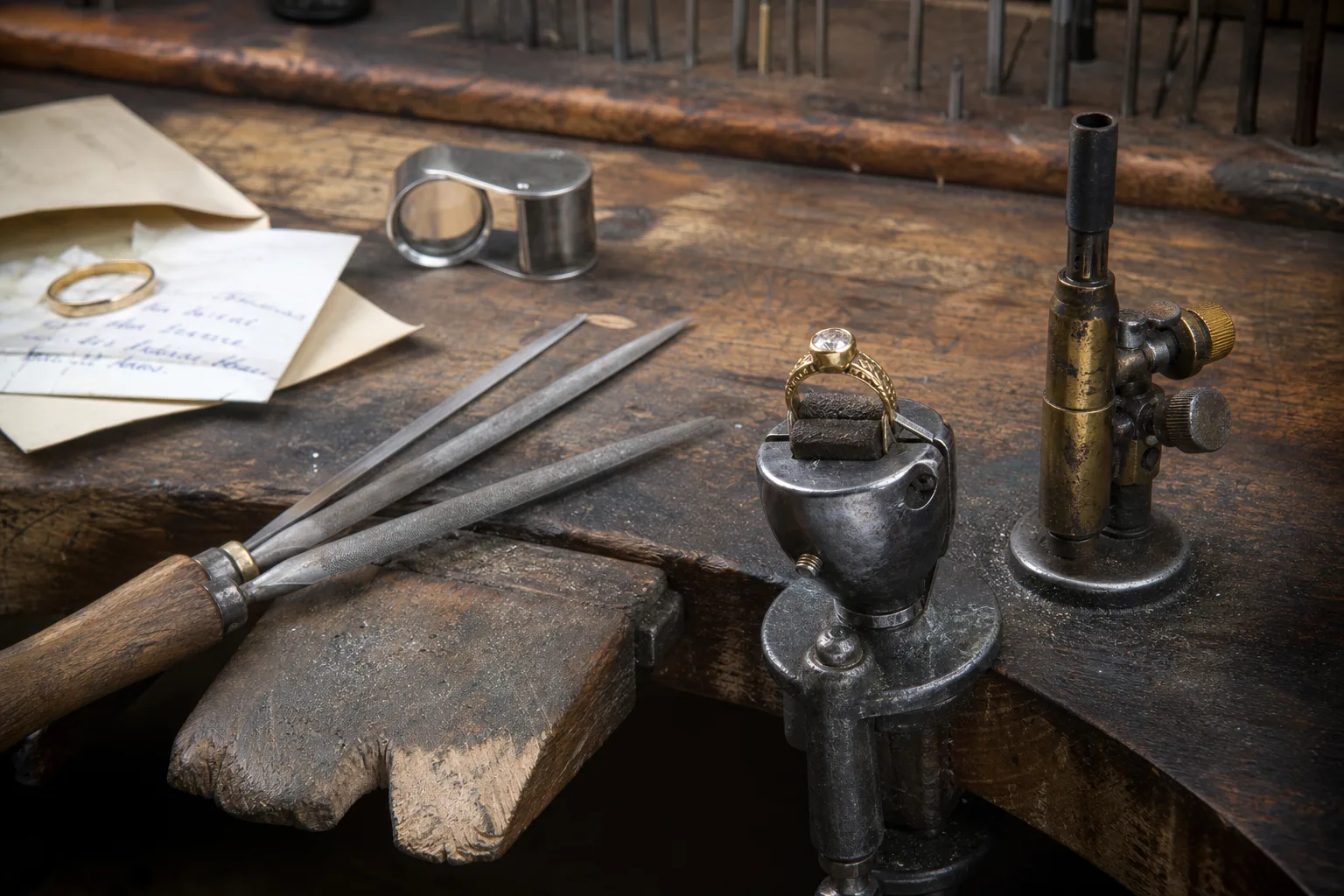
The ring arrives in an envelope from a probate attorney, or in a small box a parent hands over with instructions that are mostly sentimental, and someone has to decide what to spend on it. That someone is usually not the person who will wear it. The decision looks like a single number on a repair envelope, but it is really three decisions stacked together: what work the piece actually needs, how the bench is going to charge for that work, and what happens to the price if the piece behaves badly once it is hot. Getting the second one right is what keeps the third from becoming your problem.
Fixed price, bench hour, cost plus: the same job, three different risks
Most routine work is quoted fixed price, because most routine work is predictable. A sizing down on a plain gold band, a chain solder, a clasp swap, a rhodium replate on white gold: these are jobs a bench has done several thousand times, and the shop has a price card because the variance is small. Fixed price puts the overrun on the jeweler. If the solder joint fails and has to be redone, that is their afternoon, not your invoice. You pay a modest premium for that certainty, buried in the card price, and on small work it is almost always worth paying.
Bench hour, sometimes quoted as a day rate for a full restoration, shows up when nobody can see the end of the job from the front counter. Antique filigree, a Victorian mourning piece with hair under glass, a bracelet with forty links of which an unknown number are cracked. The shop charges for time because the time is genuinely unknown, and the risk of discovery sits with you. That is not a trap, provided two things are true: you get a written estimate of hours with a stated point at which the bench stops and calls you, and you get to see the piece under a loupe before the clock starts.
Cost plus is the third model, and it is the one people misread. Here the labor is quoted, and metal, stones and findings are billed at what the shop pays plus a stated markup. It is standard on anything where the material is a real fraction of the bill: adding two sizes to a heavy platinum shank, replacing a lost half-carat stone, building a new head. The advantage is that you are not paying a padded allowance for material the job might not need. The exposure is that metal moves, so a quote from six weeks ago is a quote, not a price.
Why sizing up and sizing down are not the same transaction
Going down is subtractive. The bench cuts out a segment, closes the shank, solders, files, polishes, and returns metal to you or credits it against the bill. Labor dominates, the outcome is easy to predict, and fixed price is appropriate. Going up is additive, and additive work is where the money is. Beyond about a size and a half, you are not stretching anything: you are inserting new metal that has to match the original in color and karat, which means the shop is buying material, and platinum, palladium white gold, and rose gold all price differently. This is why a sizing up quote so often comes back as cost plus while the sizing down quote came back flat.
Then there are the pieces where sizing is the smaller half of the job. Full eternity bands cannot be sized in the ordinary sense, because every millimeter removed removes a stone; the honest options are a new band, or stones reset around a rebuilt shank, and both are quoted as fabrication. Channel settings, pave along the shoulders, an inscription that runs the full interior, tension settings, and anything titanium or tungsten all move the piece out of the price card and into a conversation. An experienced bench will tell you this at the counter in ninety seconds. Take that as a good sign rather than an upsell.
What is worth fixing, judged by what fails next
The test that survives repeated use is not the value of the piece. It is whether the repair addresses the reason the damage happened. Retipping four worn prongs on a solitaire is cheap and buys real time, but if the prongs wore because the head is thin and forty years old, retipping is a patch on a part that is going to fail again, and a new head costs more once instead of less three times. A single broken chain link solders for very little; a chain that has broken twice in different places is fatigued along its length and wants replacing. Shanks that have worn to paper get a new shank, not a build-up of solder.
Some damage is not worth fixing at all, and knowing which is the most valuable thing a long-serving bench offers. Fire-damaged or heat-damaged colored stones do not come back. Crizzled or chalky old-cut diamonds can be recut, but only at a weight loss you should see quantified first. Costume pieces with plated base metal cannot take solder heat without stripping. Where a piece has sentimental weight and no structural future, the usual answer is repurposing: the stones move into something wearable, and the original goes into the box intact rather than half-repaired. On plated and karat-marked work, the Federal Trade Commission is responsible for how metal content and quality claims are described, which is worth knowing when a shop offers to replate rather than replace.
Writing it so the overrun has an owner
Ask which model you are being quoted under, and say the words back. On fixed price, confirm that the number includes finishing and polishing, and that a failed joint is redone at no charge. On bench hour, get the hour estimate, the rate, and the stop-and-call threshold in writing on the envelope. On cost plus, get the labor figure fixed, the markup stated as a percentage, and a note that material is priced at the day of the work. Then ask about stone risk: reputable shops will either accept liability for stones they handle or tell you plainly which ones they will not heat.
Photograph the piece from both sides before it leaves your hands, keep the itemized envelope, and hold the quote against the finished invoice line by line. Where the two match, you have found a bench worth returning to with the next piece.