Shipping Someone Else's Goods? The Four People Whose Week Decides Your Damage Claim
A damage claim is usually settled by decisions made weeks earlier, by a packer, a shift lead, a driver and a claims clerk you will never meet.
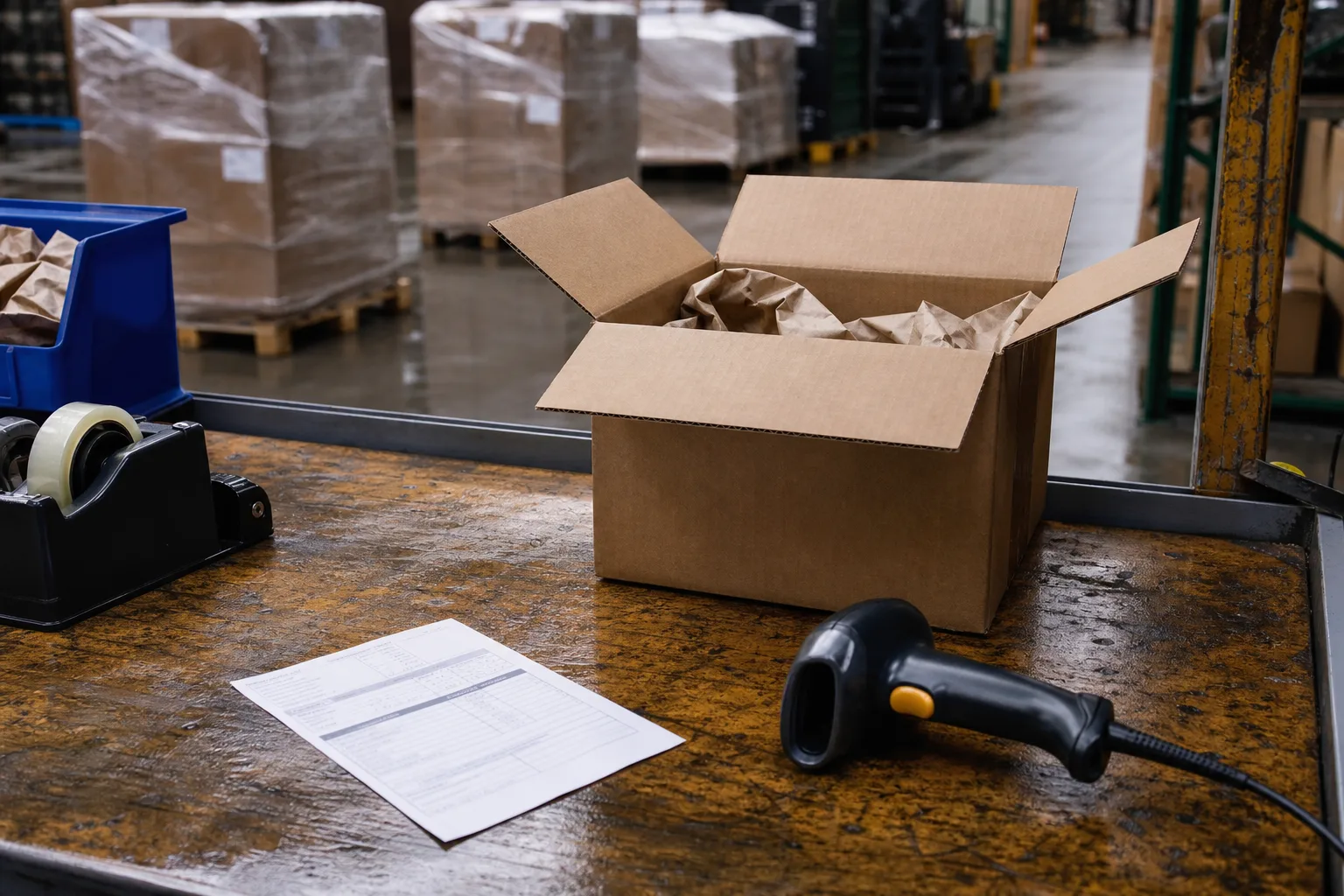
A damage claim is rarely won at the moment the box is opened. It is decided weeks earlier, on an ordinary Tuesday, by a packer who chose a carton size, a shift lead who signed a bill of lading without walking the pallet, and a contract clause someone accepted because the storage rate was good. If you are arranging fulfillment for a business, a client, an estate or a parent, you are making a decision that other people will execute and other people will live with. The useful work is figuring out whose hands the goods actually pass through, and what each of those people is measured on.
The four people between your decision and the doorstep
Start with the packer, because everything downstream inherits their choices. In most warehouses the packer is working to a rate, pulling a carton the software suggested, adding void fill from whatever is on the bench that shift, and scanning a label. They are graded on units per hour and on mispicks, not on whether a mug survives a fall onto a concrete dock. The shift lead builds and wraps pallets, and decides whether a driver waits while someone counts. The driver signs for piece count, not condition, unless someone makes condition an issue at the door. The claims clerk, who may work for the carrier or for a third-party administrator, reads whatever paperwork those three produced and nothing else.
None of those roles is hostile to you. They are simply working to targets that are not your targets, in a week that includes a truck running two hours late, a temp who started Monday, and a printer that jams on the third label of every roll. That is the ordinary texture of it. When you write instructions, write them for that week rather than for a calm one, because the shipment that gets damaged is almost always the one that moved on the day everything else went sideways.
Put the packing standard on paper before anything ships
Ask your fulfillment provider or moving company for their written packing specification, item by item, for the things you actually care about. What you want is unglamorous and specific: carton grade, minimum inches of cushioning on each face, whether fragile items are double boxed, whether liquids are bagged, whether anything is palletized on stretch wrap alone or banded. If the answer is a shrug and an assurance that they pack everything carefully, that is your answer, and it is the answer you will be quoting back to yourself later. A one-page spec you both signed is worth more in a dispute than a year of good intentions.
Then ask what evidence exists that the spec was followed on any given day. Many operations photograph the packed carton before the tape goes on, and store that image against the order number. Some record the weight captured at the pack bench, which is a quiet and reliable tell: a carton that shipped four ounces light was missing cushioning. Ask where those photos live, how long they are kept, and whether you can pull them yourself without asking a person. Ninety days is a common retention window, and claims routinely outlive it.
The clocks that run without telling you
Three clocks start the moment freight moves, and missing any of them can end a claim regardless of who was at fault. The first is the notation clock: visible damage is supposed to be written on the delivery receipt at the moment of delivery, in ink, by the person receiving it, before the driver leaves. The second is the concealed damage clock, which applies when the box looked fine and the contents did not, and which is typically counted in days rather than weeks. The third is the formal claim filing deadline set by the carrier's tariff or your contract. Interstate motor carriers operate under federal rules administered by the Federal Motor Carrier Safety Administration, and the notice and filing periods in a carrier's terms are meant to be read, not assumed.
Practically, this means telling whoever signs for deliveries what to do in the ninety seconds they have. Photograph the pallet before the wrap comes off. Write the specific words describing what is wrong rather than the word damaged. Keep the packaging, all of it, including the void fill, because the first question a claims clerk asks is whether the box was packed to the standard claimed. People throw the box away because the recycling truck comes Thursday. Make it somebody's job not to.
Read the liability cap before you read the rate
Carriers and warehouses limit what they pay, and the limit is usually far below the value of the goods. Freight moves at a released value stated per pound unless you declare a higher value and pay for it. Third-party logistics agreements commonly cap liability at a fixed dollar amount per item, or at a multiple of the monthly storage fee, which for a pallet of electronics is a rounding error against the loss. Neither arrangement is a trick; both are priced into the rate you liked. The question is simply whether the gap between the cap and the true value sits with you, with the client, or with an insurer.
That gap is what cargo or inland marine coverage exists to fill, and it is worth pricing before the first shipment rather than after the first loss. Confirm what triggers it, whether it covers goods in storage as well as in transit, and whether it requires the packing standard you already agreed to. Then write down, in a sentence anyone can understand, who absorbs a broken shipment. If you are acting for someone else, that sentence belongs in front of them early, because it is the part they will remember.
Keep your own copy of the record
Everything above depends on data held in someone else's system: the warehouse management software, the label vendor, the carrier portal, the photo archive. Providers change platforms, get acquired, and occasionally shut down, and access tends to disappear faster than obligations do. Export what matters on a schedule, weekly if volume is small: order numbers, ship dates, tracking numbers, pack photos, delivery receipts, and any damage notations. Store it somewhere you control. It costs an hour a month and it turns a contested claim into a matter of pulling one file.
The people who pack and move goods are good at their jobs, and the paperwork that protects everyone is the part they will happily follow when it is written clearly and asked for in advance.