Who Sets the Hour Count on Your Legal Bill, and Why It Is Rarely Your Attorney
Two attorneys can quote very different numbers for the same matter because each is pricing a different assumption about a third party neither of them controls.
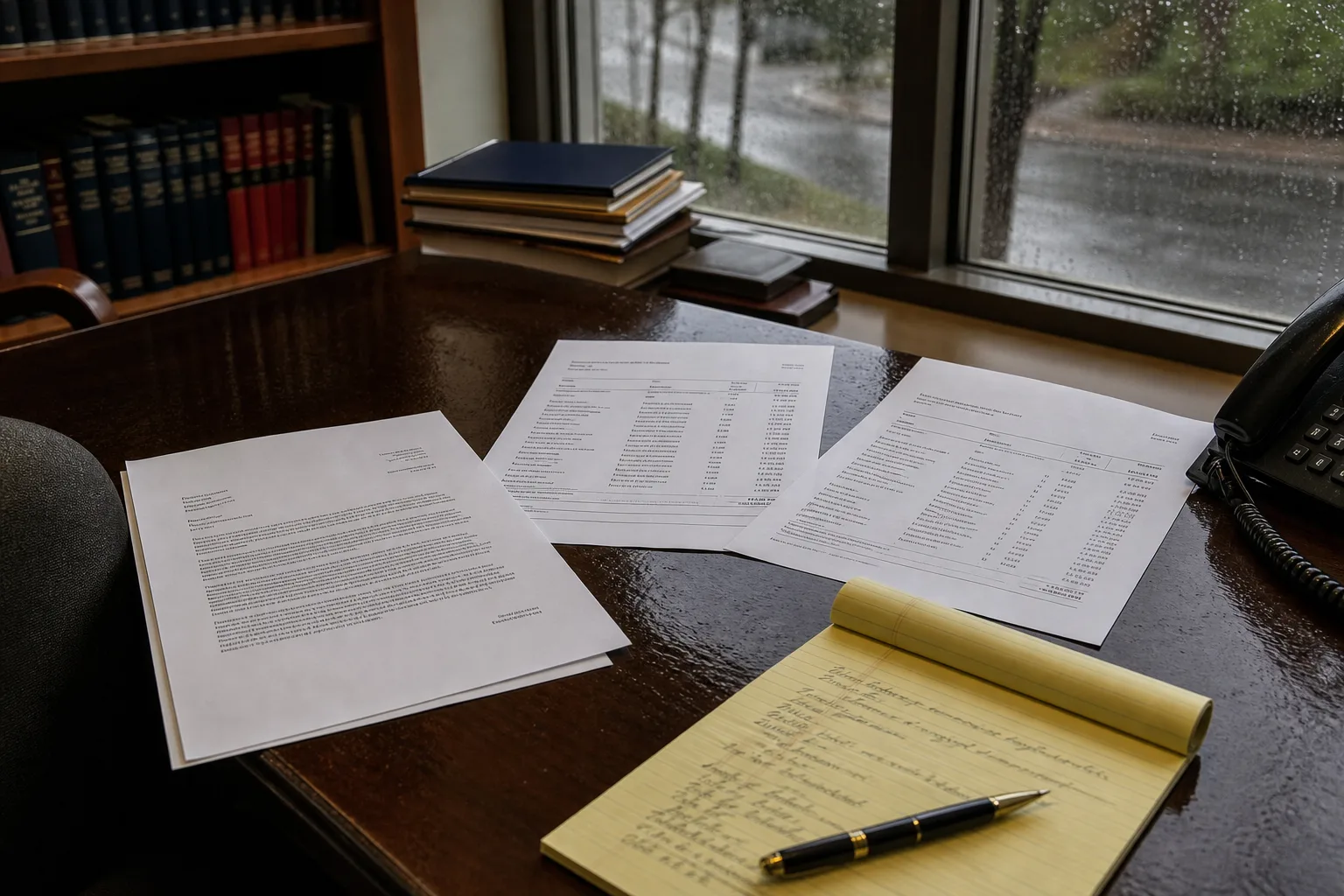
You ask two attorneys to price the same problem, a deed that needs to be corrected before your mother's house can be sold, and one comes back with a flat fee that sounds almost too contained while the other quotes an hourly rate and declines to guess at a total. Neither of them is being evasive. They are quoting against different assumptions about how much friction the file will generate, and most of that friction will be produced by someone who is not in the room: the title underwriter, the county recorder, the sibling who has to sign, the opposing attorney who answers in three weeks rather than three days.
A legal fee is quoted against a scope, and a scope is a set of predictions
When an attorney gives you a number, that number attaches to a described piece of work, not to an outcome, and the description carries hidden forecasts inside it. A flat fee for a quiet title action assumes a certain number of filings, one round of service, no contested response, and a clerk who accepts the paperwork as submitted. Change any one of those and the work changes shape. The honest version of the quote says so out loud, listing what is included and naming the events that would take the matter outside the fee. The less useful version gives you a single figure and lets you discover the boundaries later, at the point where you have already committed.
This matters more when you are acting for someone else. An adult child handling a parent's affairs, a partner winding up a small business, an executor with three beneficiaries watching the account balance: in each case the person authorizing the spend is not the person who absorbs the result. The scope is the document that lets you explain the spend afterward. If you can point to a written engagement letter that says what the fee covered and what would move the matter into hourly billing, a later conversation about an unexpected invoice becomes a conversation about facts rather than about your judgment.
The party nobody prices for is the one on the other side of the file
Legal work is reactive to a degree that surprises people paying for it. Your attorney drafts, sends, and then waits. What comes back, and how fast, is set by counsel for the other party, by a trustee's internal review calendar, by an insurance adjuster with a queue, by a homeowners association management company that meets monthly, or by a records office with a backlog. Hours accumulate in the responses to what those parties do. A cooperative opposing attorney who returns a redline in four days with two comments produces a bill a fraction the size of one who returns nothing for a month and then reopens a settled point.
So when you are comparing quotes, the useful question is not what the attorney charges per hour but what the attorney expects the other side to do. Ask directly. Have you dealt with this firm before, how does this county's recorder handle corrective deeds, does this insurer typically respond to a demand letter or wait for a filed complaint. The answers tell you where the estimate came from. An attorney who has litigated against the same opposing counsel four times is pricing from observation, and an attorney who has not is pricing from an average. Both can be reasonable. Only one of them is specific to your file.
Fixed, hourly, capped, contingency: the model decides who eats the overrun
A flat fee moves the risk of a long matter onto the firm, which is why flat fees appear where the work is predictable: an uncontested formation, a simple will package, a residential closing, a trademark filing. The firm can price it because it has done a hundred of them and the variance is small. An hourly arrangement moves the risk back onto you, and it is the honest structure for work whose length is genuinely unknown, which is most disputes. A capped or collared fee splits the difference, setting a ceiling the firm agrees not to cross without your written approval, and it is worth asking for even where it is not offered.
Contingency inverts the arrangement entirely: the firm carries the whole cost of the effort and takes a percentage of what is recovered, which suits claims with money at the end and suits nothing else. Then there are the costs that sit outside every model. Filing fees, service of process, court reporters, recording charges, expert reports, and title searches are usually advanced and billed through at cost, and they are not covered by a flat fee unless the letter says they are. The Consumer Financial Protection Bureau oversees how settlement costs are disclosed in residential mortgage transactions, and the same instinct applies here: ask which line items pass through untouched.
When two attorneys disagree, compare their assumptions rather than their totals
Conflicting advice usually turns out to be agreement about the law and disagreement about a third party's behavior. One attorney thinks the co-owner will sign once the numbers are explained; the other thinks the co-owner will hire counsel and slow the matter by four months. Those are different predictions about a person, not different readings of a statute, and you may know more about that person than either attorney does. Put the two quotes side by side and identify the single event each one turns on. Once you have named it, you can often price the difference, and sometimes you can remove it entirely with one phone call before you engage anyone.
Write down what you decide, particularly the trigger points. A short email confirming that work stops for your approval if the matter passes an agreed threshold, or if the other side files a response, converts a vague understanding into a record. Ask for interim billing rather than a single invoice at the end, and ask for narrative time entries you can actually read. If you are spending from an estate account or a shared fund, those entries are what you will hand to the people entitled to see them, and a clear one settles a question that an opaque one starts.
The number on the quote is the least informative thing about it. What tells you whether it will hold is the scope it attaches to, the pricing model that decides who absorbs a long month, and the attorney's read on the party whose cooperation you are quietly depending on. Ask about that party first, and the rest of the conversation gets much easier to have.