Your Adjuster Is One Name on the File. Find the One Who Decides
Handling a damage claim for someone else means working with a whole department, not one person, and the scope document settles more than any phone call does.
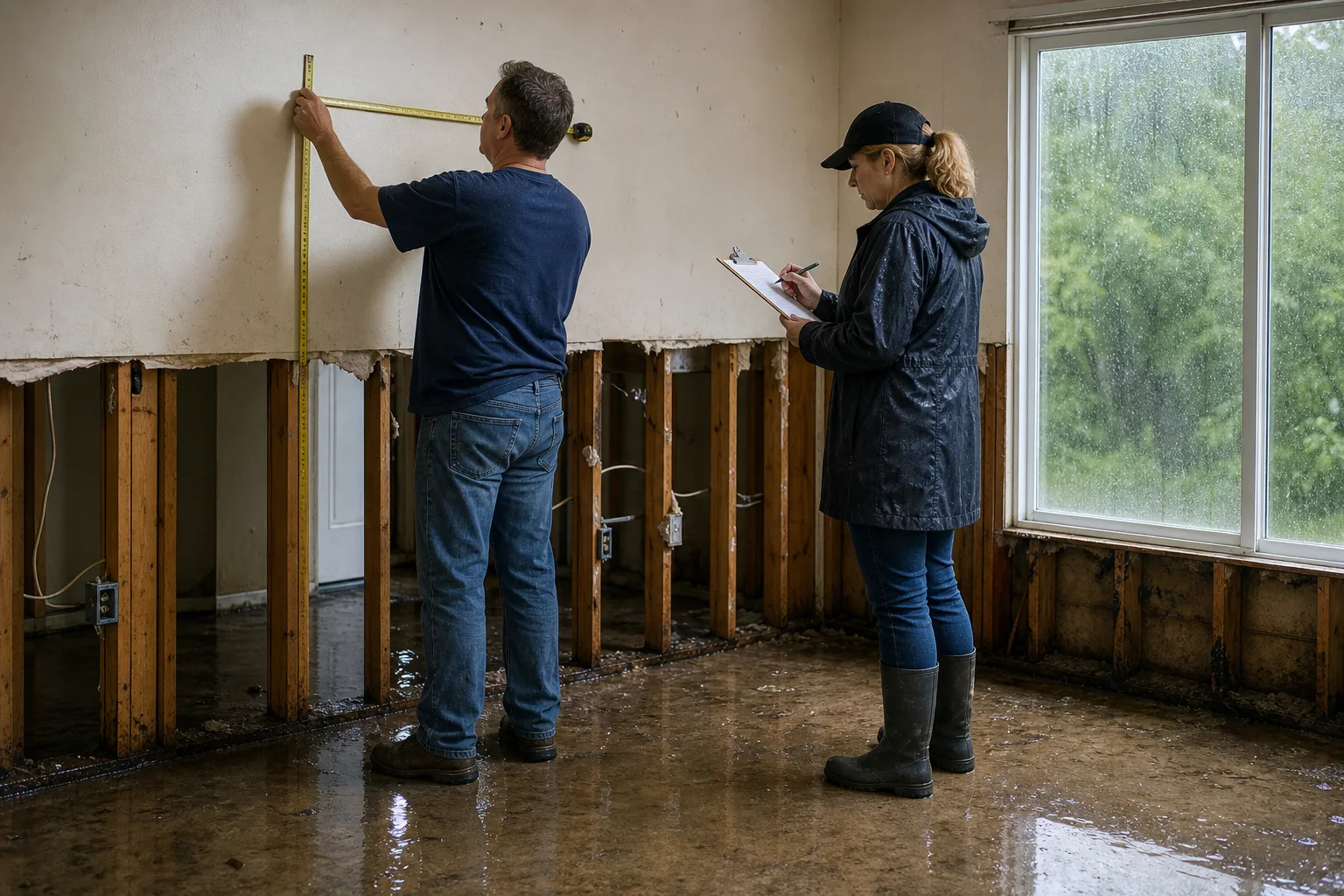
The adjuster who walks a flooded basement is often not the person who approves the payment for it. At a large carrier, a residential water or fire claim is handled by a small group whose members rarely meet each other: a desk examiner who owns the file number, a field adjuster who may be an independent contracted for the week, a contents specialist working from photographs, and sometimes an engineer brought in on a single question. If you are managing this for a parent, a sibling, or a rental you own at a distance, the first useful thing you can learn is which of those people can actually change a number.
The name on the business card is rarely the name with the authority
Field adjusters at large carriers frequently carry a settlement authority limit, a dollar figure above which their recommendation goes to someone else for approval. They do not always volunteer it, and there is nothing improper in asking. The question to put plainly is who signs off on the estimate once it is written, and what the file number is, because the file number is the only thing that survives a staffing change. Independent adjusters deployed after a storm may be gone in three weeks. The desk examiner, working from an office in another state, usually is not.
That distinction matters most when a claim reopens. Supplemental damage found behind a wall, a subfloor that fails inspection, a contents list that grows once boxes are unpacked: each of those goes back to the file, not to the person who stood in the hallway. Keep the claim number, the examiner's direct line, and the date of every conversation in one place. When the third adjuster on the file calls, you want to hand them a chronology rather than start the story over.
Measure the rooms before anyone opens a laser
The estimate that decides the payment is a measured document. It is built room by room in estimating software, with wall lengths, ceiling heights, and openings entered as figures, and every line item priced against those figures. A ceiling that is nine feet in the house and eight feet in the file changes the drywall, the paint, the crown, and the labor hours attached to all three. So walk the property with a tape before the appointment and write down each room's dimensions, the ceiling height, the number and size of window and door openings, and anything the floor plan would not show: a soffit, a bulkhead, a stair landing that eats two feet of the hallway.
Ask for the estimate as a printed room-by-room scope rather than a summary page with a total. Then read it against your own numbers. Discrepancies are usually honest, and they are also usually easy to correct within a week of the inspection and hard to correct four months later. Measurement standards of this kind sit within the remit of the National Institute of Standards and Technology, which is responsible for how physical quantities are defined and compared in the United States, and the same principle applies here: the argument goes better when both sides are working from the same figures.
When the carrier offers its own contractor
Most national insurers run a managed repair or preferred vendor program, a network of restoration firms and general contractors who work at agreed rates and bill the carrier directly. The offer usually arrives early, sometimes on the first call, and it has real advantages: the contractor is mobilized quickly, the pricing does not need to be argued, and the carrier typically warrants the work for a period. It also means the estimator and the repairer answer to the same organization. You are entitled to use your own contractor instead, and to have that contractor's estimate reviewed against the adjuster's scope.
If you take the program, ask what the warranty covers and for how long, who to call when a subcontractor fails to show, and whether the vendor's scope can be expanded on site or has to go back for approval. If you decline it, expect to reconcile two estimates line by line. Either route works. What causes trouble is starting one and switching midway, after demolition, with materials on order and a partial scope already approved.
Put the agreement in writing the same day
Verbal approvals evaporate when a file changes hands. After every substantive call, send a short email to the adjuster and the examiner summarizing what was agreed: the item, the amount, the date, and the name of the person who said it. Ask for confirmation. Do the same with additional living expenses, which have a limit and a duration that a displaced homeowner needs to know before signing a six-month lease. Photographs of the property before repairs begin, with a tape measure in frame at least once per room, are worth more than any recollection.
Acting on someone else's behalf changes what good looks like here. You are not only recovering a number; you are producing a record that the homeowner, a future buyer, or a second contractor can read without you in the room.